
Material Handling Solutions
Industrial Conveyor System Design
Designing a conveyor system requires assessing the current and future needs of the client’s operation to establish the right mix of conveyance, sortation, automation, and controls to minimize operational costs and maximize efficiency.
The SilMan Industries System Integration team partners with a broad range of industry-leading conveyor equipment providers to guarantee a perfect fit for every situation.
The Power of a Purpose-Built Conveyor System
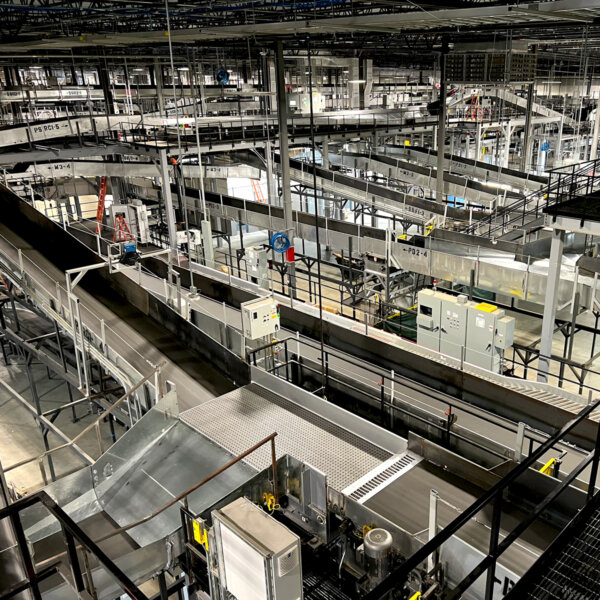
A well-designed conveyor system is more than just a collection of parts; it’s the strategic engine driving a facility’s operations. The true value of partnering with SilMan for system integration lies in the long-term, measurable performance benefits engineered into the client’s workflow.
SilMan’s collaborative approach to system integration unlocks profound operational efficiencies. The team meticulously models current and future needs to eliminate common pitfalls, such as bottlenecks and wasted movements. The result is optimized flow paths for every package, drastically reducing cycle times and enabling faster fulfillment—which leads to improved customer satisfaction and a stronger bottom line.
Beyond speed, integrated solutions deliver resource optimization. Smart controls and the robust UNISON Warehouse Control System (WCS) ensure equipment runs only when needed, significantly reducing energy consumption and wear and tear. This translates directly into substantial maintenance cost savings and an extended asset lifespan.
Simply put, SilMan engineers for peak reliability. The resulting design provides scalable growth, maximizes uptime, and ensures a superior return on investment (ROI). By integrating advanced safety and ergonomics into the core design, the firm also helps boost employee productivity and morale, ensuring the material handling environment is efficient, safe, and ready to outperform.

Conveyor Types for Distribution & Fulfillment
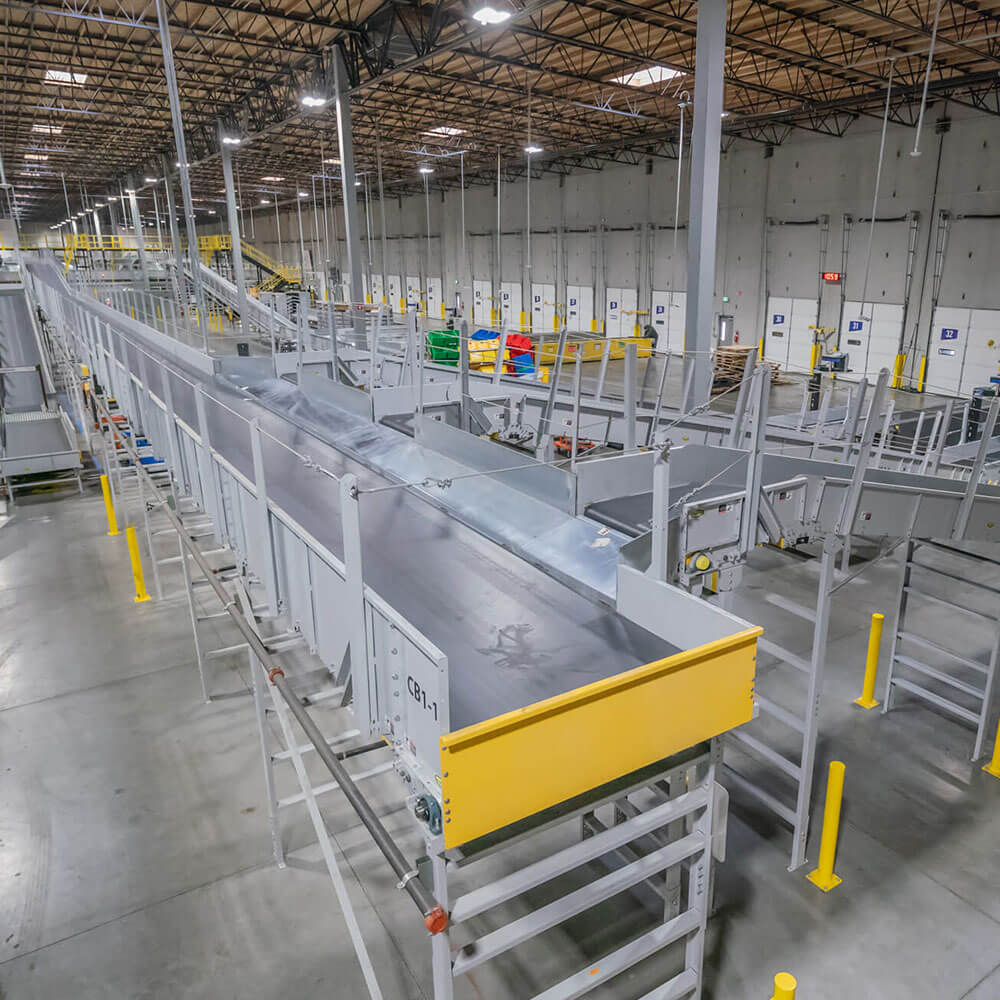
Effective system design hinges on selecting the right conveyance technology for the specific task at hand. SilMan integrates a variety of primary conveyor types to create a seamless, high-performance material handling environment tailored for distribution and fulfillment centers:
| Conveyor Type | Function in Distribution & Fulfillment Facilities |
|---|---|
| Belt Conveyors | Highly versatile for transporting items over long distances, inclines, or declines. Belt conveyors are ideal for handling small, irregular, or loosely packed items, providing a consistent, gentle transfer of products like polybags, cartons, and totes throughout a facility. |
| Roller Conveyors – Gravity | Gravity Rollers use slope to move items without power, best suited for low-volume transfers or temporary lines. |
| Roller Conveyors – Powered | Powered Rollers (Live Roller and Accumulation) use motor-driven technology for controlled movement. Accumulation conveyors are critical for buffering product flow, allowing cartons to queue without touching, which is essential before sorters, scanners, or manual workstations. |
| Chain and Slat Conveyors | Designed for durability and heavy-duty applications, these systems can handle bulky or irregularly shaped items, such as pallets, tires, and large containers. They provide the strength needed in many manufacturing, warehousing, and harsh environments where traditional belt or roller systems are impractical. |
| Sortation Systems | Dedicated sorters are fundamental to high-speed fulfillment. Systems like Slider Bed Sorters (for flat items) and Cross-Belt Sorters (for high-volume, multi-destination sorting) automatically divert items to specific outbound lanes, enabling the rapid processing of thousands of products per hour for shipping and packaging. |
The expert selection and precise integration of these components ensure maximized throughput and minimize the potential for product damage and operational friction.
The tools used by the SilMan Integration Team include mechanical and electrical engineering and 3D CAD drawings.
Statistical analysis of rate and volume for the current and future system provides valuable information, which in turn drives the determination of scope and kinds of equipment needed.
But the most important ingredient to a successful outcome is relationship and trust. It is paramount that the integrator possesses a deep understanding of the financial and operational ambitions of the system owner, as well as the company’s culture.
And, of course, the client must feel secure in the knowledge and experience in the solutions proposed by the integrator.
SilMan’s in-house engineering team includes mechanical, electrical, structural, and controls engineers. This tightly-knit team is at the heart of our integration services, providing clarity and responsiveness throughout the design phase.
Moreover, our high-touch approach is supported by a cloud-based, real-time project management platform, providing the status of your project on your mobile phone, 24 hours a day.
About the Company
SilMan Industries (previously SilMan Construction) is based in San Leandro, Calif., with Engineering and Field Operations offices in Tupelo, Miss. The firm provides integrated turnkey solutions in the Industrial, Manufacturing, Distribution, and Public Works sectors.
Notably, in 2010 SilMan Industries was contracted to dismantle and remove the NUMMI assembly line in Fremont, Calif., transport the equipment, and reinstall the system in Blue Spring, Miss., establishing Toyota Motor Manufacturing Mississippi (TMMMS). This high-visibility project ignited the company’s meteoric growth, laying the foundation for SilMan’s national service area.
For more information, please visit www.silmanindustries.com/about.

Frequently Asked Questions for Conveyor System Design
What are the different types of conveyor systems used in material handling?
The main types include belt conveyors for versatile, gentle transport of cartons and polybags; gravity and powered roller conveyors for accumulation and controlled flow; chain and slat conveyors for heavy or irregular loads; and sortation systems for high-speed diverting. SilMan Industries designs and integrates these into custom turnkey solutions for distribution and fulfillment centers.
What factors determine the best industrial conveyor system design for a warehouse?
The optimal conveyor design is determined by assessing package dimensions and weight, required throughput (items per hour), facility layout constraints, and the need for specific functions like accumulation, sortation, or incline transport. A purpose-built system balances current operational flow with scalable growth to maximize long-term ROI.
What is the difference between gravity roller conveyors and powered roller conveyors?
Gravity roller conveyors utilize a sloped design to move items without power, making them cost-effective for low-volume or temporary lines. Powered roller conveyors use motor-driven technology for controlled movement and accumulation, which is essential for buffering product flow before scanners, sorters, or workstations.
How does a warehouse control system (WCS) improve conveyor efficiency?
A Warehouse Control System, such as SilMan's UNISON WCS, acts as the "brain" of the conveyor, ensuring equipment runs only when necessary. This reduces energy consumption, minimizes maintenance costs, extends asset lifespan, and eliminates bottlenecks by orchestrating real-time communication between hardware and the facility's WMS.
