
Material Handling System Integration:
Fulfillment and Shipping System
for Levi Strauss

CLIENT
Levi Strauss & Co.
INDUSTRY
Apparel
PROJECT SCOPE
Material Handling System Integration, Design and Engineering, Conveyor and Equipment Solutions, Warehouse Control System, Millwright/Mechanical and Electrical Installation, Project Management
LOCATION
Toronto, Ontario, Canada.
About this Article
The SilMan System Integration Team provided custom design, engineering, and installation services to to create a new distribution and fulfillment center for the Levi Strauss & Co. Distribution Center in Toronto, Ontario, Canada.
Levi Strauss in Canada
Levi Strauss is a legend. Born in San Francisco, Calif., the company is a product of the gold rush era. And indeed, the Strauss family struck gold. By the time the company went public in 1971, Levi Strauss products were being sold in 50 countries.
In 1978, Levi Strauss established its first distribution center (“DC”) in Canada. Since then, the Canadian public has fully embraced Levi’s fashion. In addition to their 30+ corporate retail spaces, Levi products are available in a variety of brick-and-mortar stores and chains, as well as e-commerce platforms.
Levi Canada has achieved consistent gains in market share over the last four decades, but those gains took a toll on the Toronto plant. In response, beginning in 2017, Levi began planning improvements to the DC, and in 2018, SilMan Industries was awarded a contract to renovate the entire order induction and sortation fulfillment system. The project was completed in 2020.
Toronto Distribution Center Facilities
Several crucial renovations to the facility had been completed before the SilMan Team came onsite.
First, updates to the storage system add density of cases and pallets, increasing the number of primary pick locations in the overall system. Additionally, new order-picking carts boost the number of discrete orders team members can pick on a single cart, increasing user safety and ease of use.
Secondly, upgraded pallet racking systems expand the consolidation of orders in shipping, thus providing a buffer for orders queued for shipping.
Third, office and team member areas were renovated beyond the fulfillment system, providing an enhanced work environment for the staff and visitors alike.

The central material handling system integration innovation provided by SilMan was to create two distinct flows through a single induction point. This arrangement splits orders flagged for Value-Added Services from those to be directly sent to shipping. The result is a continuous flow to VAS and shipping, avoiding bottlenecks and increasing throughput.
Material Handling System Integration Project
The scope of work for the project includes upgrades to equipment and controls, as well as operational and ergonomic improvements to the Value-Added Services and Shipping area.
The existing system was replaced with a three-part solution: Picking Induction Conveyors, Value-Added Services Systems and Shipping Conveyor Systems and Sorters.
Additionally, in Phase 2, Levi will be able to further sort VAS orders by specific services to be provided, creating additional efficiencies to the overall VAS process.
Controls
SilMan’s “UNISON” Warehouse Control System (“WCS”) provides the needed functionality for Levi to direct orders to their respective destinations (Value Added / Quality Assurance / Direct to Ship). The WCS solution provides management with system configuration tools to manage order and ship priorities, depending on daily workflow. SilMan WCS also provides real-time system performance metrics along with a Human Machine Interface (HMI) that allows users to evaluate system performance.
Value-Added Services
The Value-Added Services (“VAS”) process lies at the center of the Toronto operation. Orders flagged for special handlings, such as price tags, security devices or other promotional collateral, are serviced by the Levi VAS team. This specialized quality assurance and service team adds tremendous value to key Levi’s partners.
Once completed, VAS orders are inducted onto the outbound conveyor, joining the cross-dock “Direct to Ship” traffic. The system automatically weighs and scans each order before sortation to shipping.
Shipping
This final sort directs the order to palletizing stations near the shipping doors.
The newly expanded shipping area is an essential accompaniment to the system upgrade. Additional lanes, and increased space between lanes, were added to the shipping area. More palletizing positions have been created and dock access is expanded.
As a result, the shipping center is able to manage the increased speed and volume of the upgraded system, with reduced risk to fork operators.
Speak to a key team member on this project

Meet David Rebata.
For more information about this project or related topics, contact David by email or call directly at 510.409.6567.
You may also enjoy this article.

Close-up: Updated Levi Strauss Material Handling Systems
Images of the newly installed equipment and system solutions at the Toronto Distribution Center.
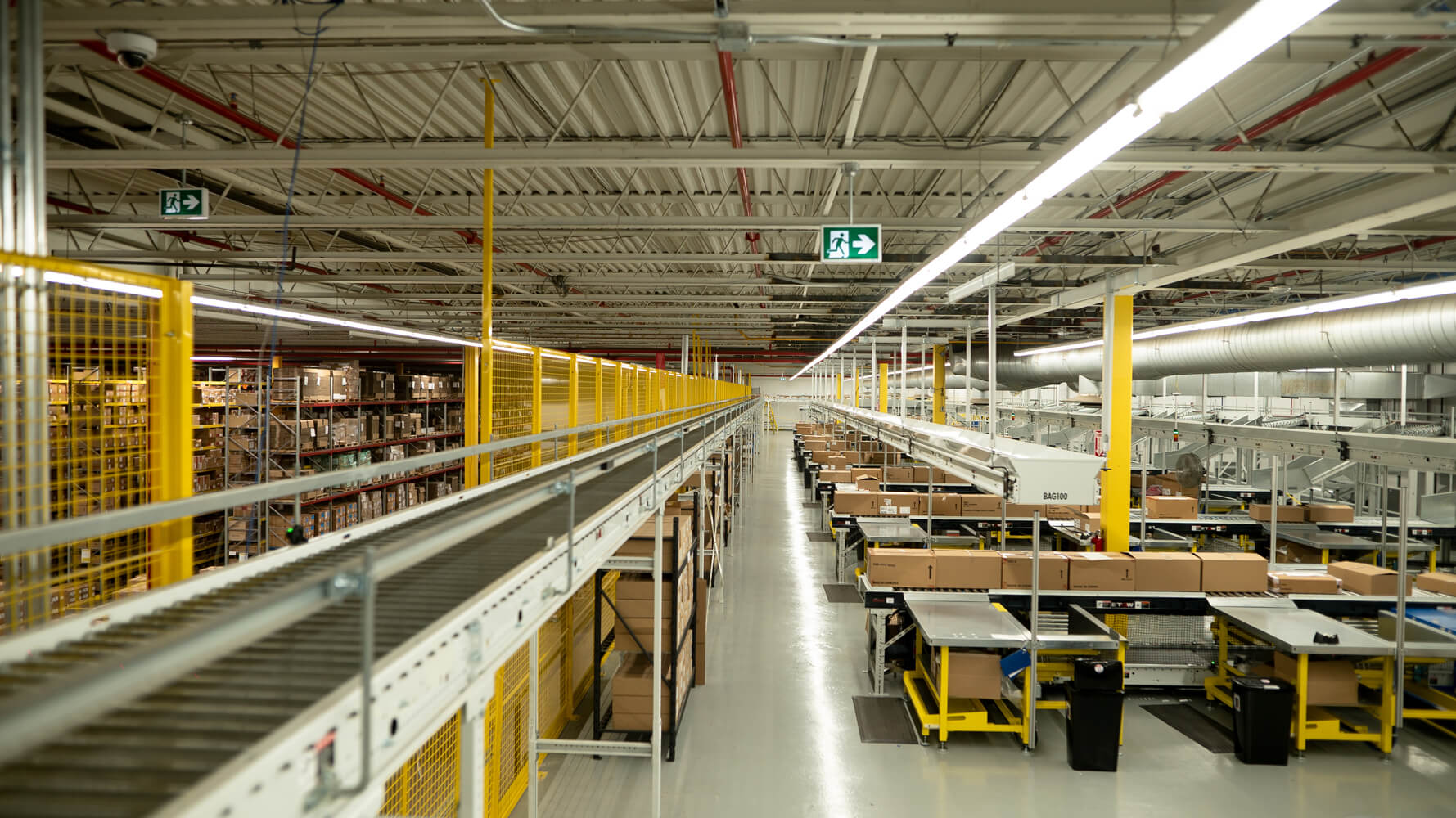
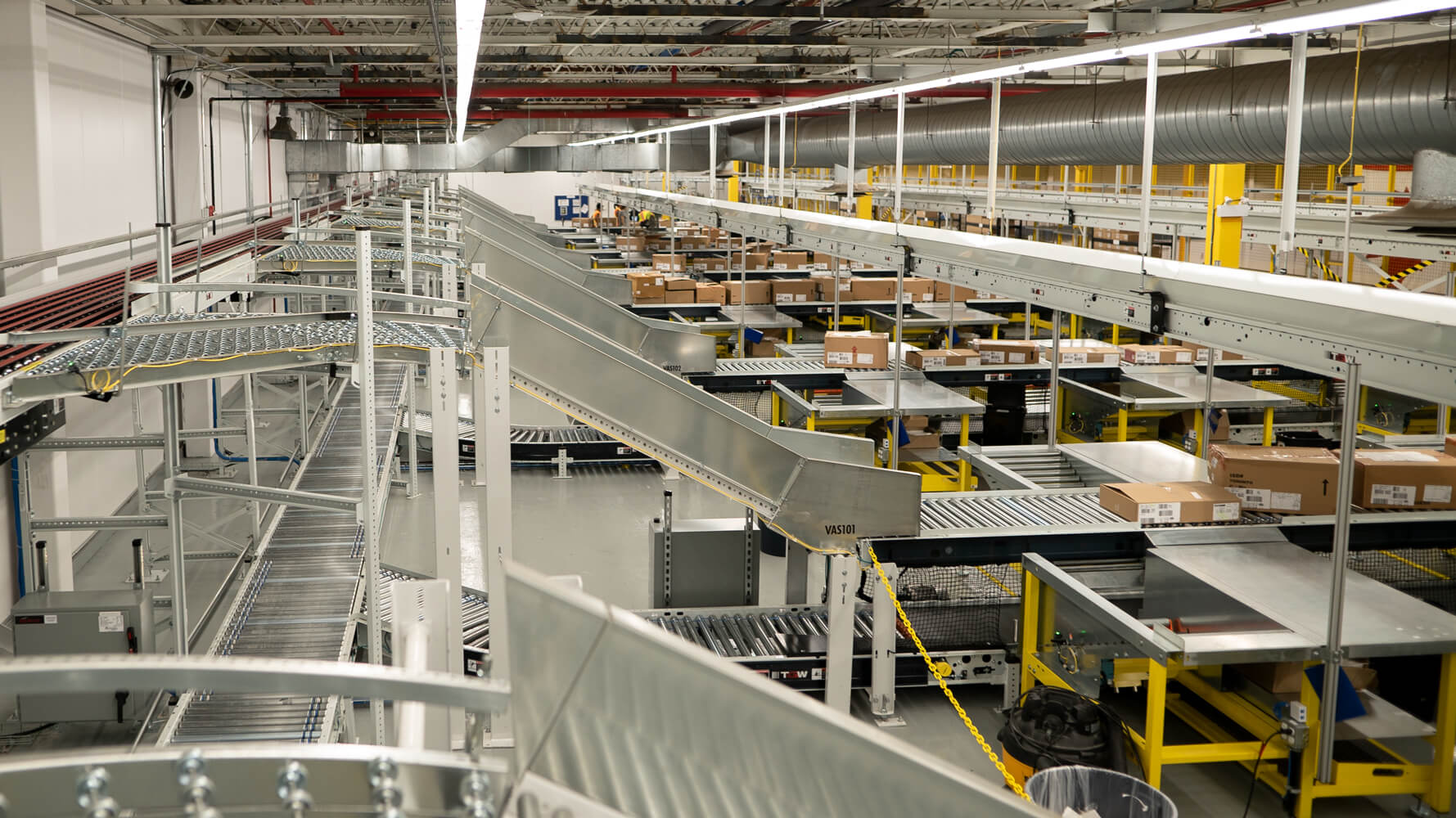

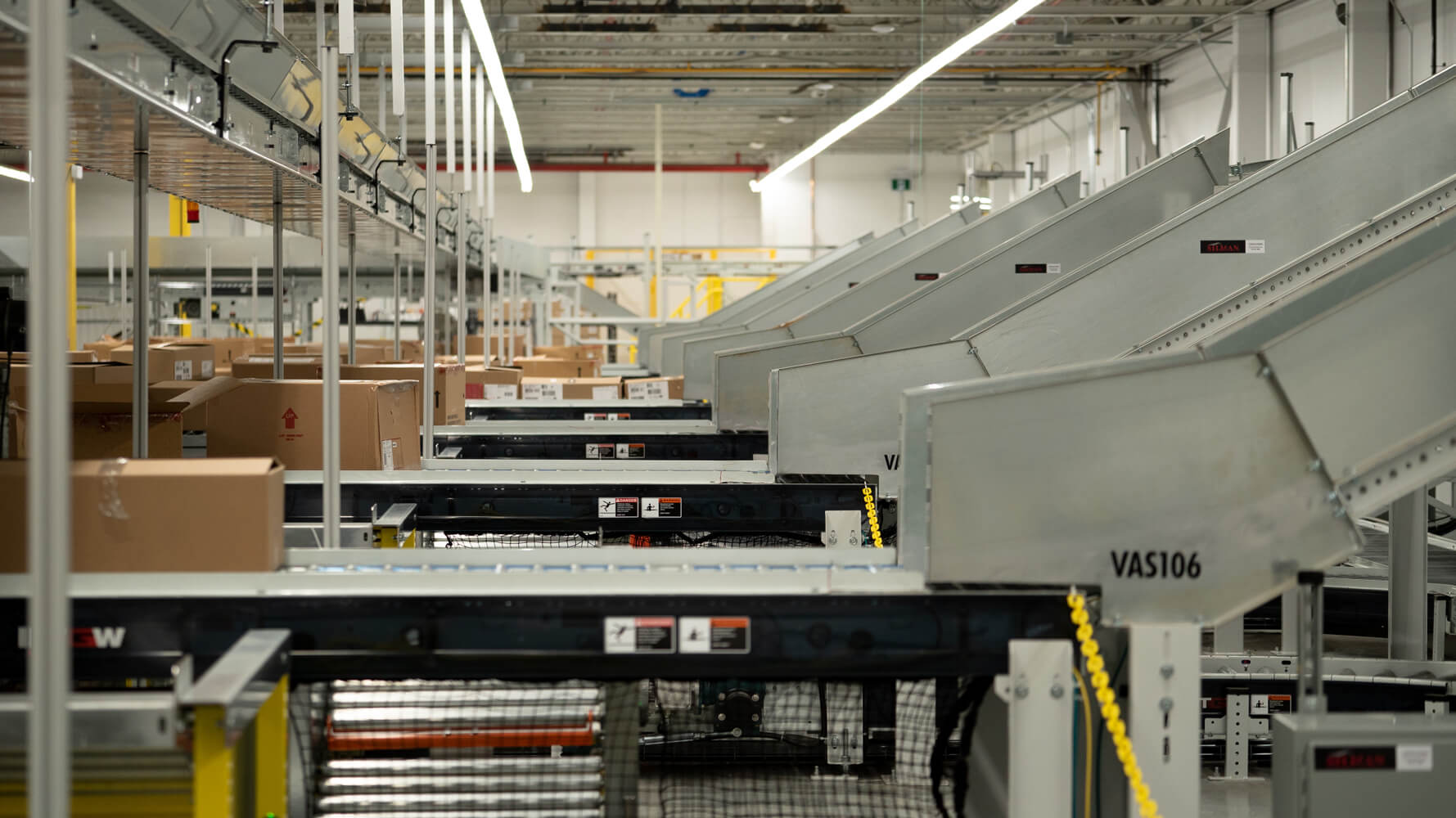


Photo credit: Michael Cao
System Integration: Outcomes Achieved
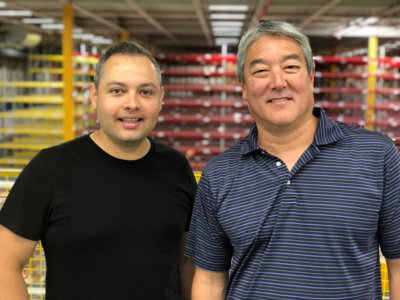
Levi Strauss Director of Strategic Projects Victoriano Molina (left) and Keith Hiyama, lead engineer for SilMan Industries (right).
SilMan’s material handling system integration solution provided improvements in three distinct areas.
1. System Performance
The upgraded system replaces legacy equipment, which required constant repairs resulting in downtime and lost productivity. The new system provides increased capacity and system performance that exceeded Levi’s expectations from the moment they assumed control of the system.
2. Team Member Wellness
Updated VAS stations provide improved ergonomics, including adjustability to each team member’s height. Each station also has a gravity induction feed that inducts orders efficiently to the outbound conveyor to shipping. Awkward lifts and twists are avoided.
3. Efficiency
All VAS Station induction conveyors have built-in functionality that maximizes accumulation for increased volume delivered to all VAS lanes/stations. This increases the number of orders processed per station/team member and overall throughput capacity. No idle time!
SilMan’s “One Team” approach delivers outcomes like this one due to efficiencies gained by in-house resources. Their specialties include distribution center optimization for the Fulfillment and Parcel sectors (see “A Comprehensive Guide to Efficient Parcel Handling Systems”), food and beverage manufacturing and warehouse solutions, and end-to-end innovative manufacturing solutions.
Newly Integrated System Goes Live
And finally, the new system was implemented without interruption to existing operations and provided increased throughput rates on the first day of implementation. The installation was an instant success.

The Levi Toronto team gathers to mark the first day of their new system.
Conveyor and Controls Equipment
SilMan is grateful to the many partners, vendors, and tradesmen who made this successful outcome possible.
| Company | Product |
|---|---|
| TGW | Narrow Belt Sorters, Accumulation Conveyors, and Motorized Driven Roller Accumulation |
| Manhattan Associates | Warehouse Management Software (version 2018) |
| Cognex | Scanners |
| Mettler | In-line scale |
David Rebata and Keith Hiyama are account managers for the project.
About the Company
SilMan Industries (previously SilMan Construction) is based in San Leandro, Calif., with Engineering and Field Operations offices in Tupelo, Miss. The firm provides integrated turnkey solutions in the Industrial, Manufacturing, Distribution, and Public Works sectors.
Notably, in 2010 SilMan Industries was contracted to dismantle and remove the NUMMI assembly line in Fremont, Calif., transport the equipment, and reinstall the system in Blue Spring, Miss., establishing Toyota Motor Manufacturing Mississippi (TMMMS). This high-visibility project ignited the company’s meteoric growth, laying the foundation for SilMan’s national service area.
For more information, please visit www.silmanindustries.com/about.
