
Material Handling Services
Parcel Handling
A Comprehensive Guide to Efficient Parcel Handling Systems
Efficient parcel handling is critical for supply chain operations in today’s world of e-commerce and last-mile delivery. As consumers increasingly expect faster deliveries, logistics companies are under pressure to process high volumes of parcels accurately and quickly. Even minor inefficiencies in parcel handling can lead to delayed shipments and dissatisfied customers.
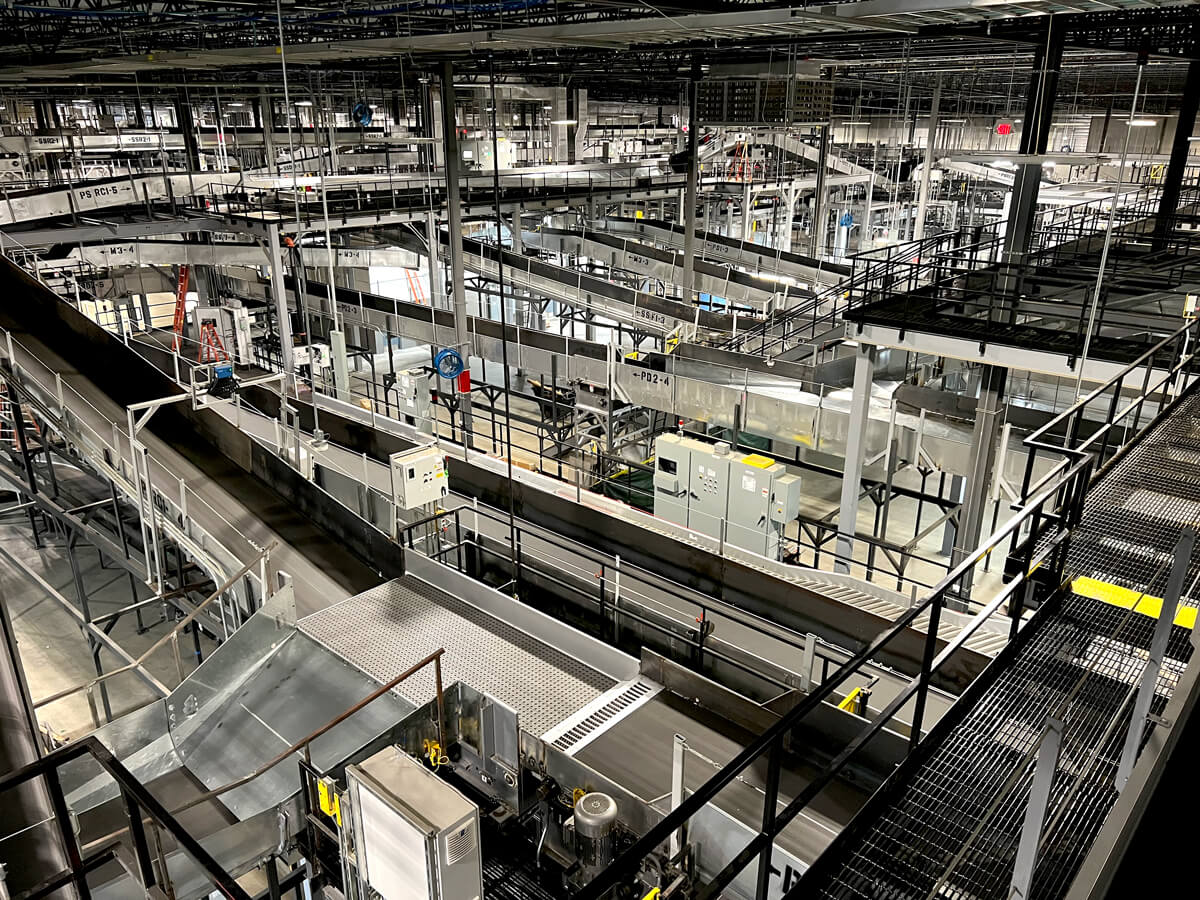
Advanced parcel handling systems are, therefore, essential for companies to keep pace with ever-growing demand while also controlling costs. These systems integrate mechanical equipment, sensors, automation, and software to enable smooth, high-speed parcel flow and sorting. Proper system design, integration, and implementation require specialized expertise.
SilMan Industries is a leader in providing complete, customized parcel-handling solutions. With extensive experience across parcel logistics, e-commerce fulfillment, and manufacturing sectors, SilMan offers system analysis, engineering design, equipment specification and integration, controls programming, and turnkey implementation.
What is Parcel Handling?
Parcel handling refers to a processing system utilizing conveyor, sortation, weight and dimensioning, tracking, and delivery of parcels in logistics operations. But how exactly does it differ from general package handling?
Parcels refer to items that have been packaged for shipping, usually to an end consumer rather than a business. They are typically smaller and lighter than bulk shipping packages. Efficient handling of large volumes of such parcels is vital for last-mile delivery in e-commerce and omnichannel retail.
In modern logistics facilities, parcels pass through several key processes, including unloading, induction, scanning, automated sorting, conveyance, and loading. Standard sizes and forms are critical for smooth parcel flow. State-of-the-art systems integrate sensors, controls, and data analytics with mechanical infrastructure to enable efficient, high-speed operations.
As parcel volumes grow exponentially, advanced parcel handling solutions bring major competitive advantages through faster processing, reduced errors, enhanced traceability, and lower operating costs. Investing in the right solutions is key for logistics players to profitably meet customer expectations.
How Parcel Handling Systems Work
Parcel handling systems integrate various technologies for smooth end-to-end processing:
- Induction: Parcels are unloaded from trucks either manually or using automated unloaders, then transported via conveyor to the induction area. Scanning captures critical parcel data.
- Singulation: Parcels are separated into a controlled flow for easier processing using techniques like power roller conveyors. Gapping allows proper scanning and sorting.
- Sorting: Sorters like cross-belt diverters route parcels by destination into chutes based on distribution center, geography, or delivery route as per system logic.
- Conveyance: Take-away conveyors transport sorted parcels to dispatch areas for loading into delivery vehicles. Some storage buffering may be incorporated.
- Dispatch: Parcels are loaded onto delivery trucks either manually or via automated loading systems. Data is updated for chain of custody documentation.
The mechanical equipment, sensors, controls, and software in the system work in perfect sync to enable smooth, high-speed parcel flow.
SilMan Industries plays a lead role in designing holistic solutions spanning system analysis, process optimization, equipment integration, and controls programming to deliver maximum efficiency, speed, and accuracy.

Key Parcel Handling Components and Technologies
Modern parcel-handling systems integrate a range of mechanical, sensory, and software technologies for efficient processing. Some key components include:
Parcel Handling Induction Systems
Induction refers to the intake and loading of parcels onto the handling system. Key goals are to smoothly transition parcels from manual to automated handling and queue them for sorting. Optimized induction with integrated scanning maximizes system throughput.
Singulation Parcels
Singulating parcels means creating separation between each unit for individual processing. This avoids jams, enhances scanning accuracy, and prevents parcel damage. Commonly used technologies include belt conveyors with speed control and roller conveyors with zoning.
Parcel Handling Sortation Systems
Automated sortation enables routing parcels based on destination to the correct chute, conveyor or area. Cross-belt sorters, tilt-tray sorters, and sliding shoe sorters are commonly used for high-speed parcel sortation. Sortation systems can handle mixed shapes and sizes.
Parcel Handling Conveyor Systems
Conveyors move parcels between different handling stages and final loading. Modular conveyors can connect unloading, scanning, sorting, and dispatch areas for optimized parcel flow. SilMan offers a wide range of parcel-handling conveyor solutions tailored to each facility’s needs.
Parcel Handling Scanners and Readers
Barcode scanners, RFID readers, and optical character recognition (OCR) are used at various points to track parcels and ensure proper routing. Dimensional scanning also plays a key role in optimizing manifesting and billing.
Controls and Automation in Parcel Handling
PLC-based controls coordinate sensors, software, mechanical equipment, and plant interfaces to orchestrate smooth parcel flow. Automation reduces manual errors and boosts processing speeds.
Parcel Print and Apply
Print & apply systems automatically print shipping and item labels and apply them to parcels without stopping movement. This avoids bottlenecks and improves accuracy over manual labeling.
Cross-Docking of Parcels
Cross-docking refers to the direct transfer of parcels from inbound to outbound trailers, avoiding storage and double handling. This technique accelerates delivery, improves dock utilization, and lowers costs.
Parcel Air Cargo Handling
Air cargo parcel handling has unique requirements, such as customs clearances, hazardous goods handling, and integration with passenger baggage systems. SilMan offers customized air cargo handling solutions.
Parcel Handling Safety Considerations
Conveyor safety is paramount to personnel working near fast-moving mechanical systems. SilMan incorporates guarding, access control, visual/audible warnings, and safe equipment designs per OSHA standards.
Combining various hardware, software, and sensor technologies with safety-focused mechanical infrastructure enables seamless, efficient, and reliable automated parcel handling.

Importance of Automation in Parcel Handling
Automation refers to using control systems and information technologies to automatically direct and optimize mechanical functions with reduced human intervention. Automated parcel handling utilizes programmable logic controllers, sensors, data analytics, and machine-to-machine communication.
Key benefits of automation include:
- Increased processing speeds: Automated routing, scanning, and sorting accelerate parcel flow through the facility.
- Reduced errors: Automated checking and tracking minimize missed scans, incorrect dimensions, or faulty sortation.
- Enhanced traceability: End-to-end parcel monitoring provides precise data for inventory management and chain of custody.
- Improved utilization: Automated load balancing across sorters, scanners, and conveyors optimizes asset utilization.
- Lower costs: Reduced processing time, damage, and rework lowers per-parcel handling costs.
Together, these benefits make last-mile operations more efficient and cost-effective. Automation also makes parcel processing scalable to handle rapid order surges from e-commerce and omnichannel sales.
Additional Successful Parcel Handling Solution Implementations by SilMan
thredUP
SilMan implemented an innovative pack-out system for thredUP’s new distribution center, allowing efficient processing of polybag and cardboard shipments. The automated print-and-apply, weighing, and manifesting solution increased throughput with near-perfect order accuracy.
OnTrac
SilMan designed a high-speed parcel sortation system for OnTrac's facility. Induction, scanning, automated sorting, and take-away conveyors were integrated for optimized parcel flow, improving network-wide efficiency.
FedEx Ground
SilMan upgraded parcel handling systems across 10 FedEx Ground facilities, encompassing controls, software, mechanical and electrical updates. Multi-site integration and implementation capability were leveraged.
The case studies featured in this article demonstrate SilMan's systems integration expertise across parcel-handling sub-systems. Holistic solutions lead to increased speed, higher accuracy, greater control, and enterprise-wide efficiencies for clients. Robust parcel handling systems future-proof operations even as volumes grow exponentially.
Realize the Future of Parcel Handling Today
SilMan Industries is ready to partner with you to envision and implement the next generation of automated parcel handling at your facilities. Our solutions combine deep domain expertise, system integration capabilities, and commitment to customer success to drive speed, accuracy, and reliability to new levels.
Contact our parcel-handling specialists today for a consultation on how we can help you meet and exceed goals around last-mile efficiency, cost management, and customer service. Future-proof your operations and step into the future of parcel handling.
Are we meeting for the first time?
About SilMan Industries
SilMan Industries (previously SilMan Construction) is based in San Leandro, Calif., with Engineering and Field Operations offices in Tupelo, Miss. The firm provides integrated turnkey solutions in the Industrial, Manufacturing, Distribution, and Public Works sectors.
Notably, in 2010 SilMan Industries was contracted to dismantle and remove the NUMMI assembly line in Fremont, Calif., transport the equipment, and reinstall the system in Blue Spring, Miss., establishing Toyota Motor Manufacturing Mississippi (TMMMS). This high-visibility project ignited the company’s meteoric growth, laying the foundation for SilMan’s national service area.
For more information, please visit www.silmanindustries.com/about.

Frequently Asked Questions About Parcel Handling Systems
What is the benefit of a custom-engineered conveyor system versus a pre-built solution?
A custom-engineered system is designed to address a facility's specific challenges, such as increasing capacity within a limited space or integrating new technology with existing infrastructure. This approach ensures maximum efficiency, avoids unnecessary downtime, and provides a solution that best fits the unique operational needs and goals of a business.
How can a parcel handling system be upgraded without interrupting daily operations?
Upgrading a system without interrupting operations is a complex process that requires a strategic approach. Crucial for minimizing business disruption and preventing revenue loss, it is best accomplished with a carefully planned, phased installation. In this case, the new conveyor system was overlaid and intertwined with the existing equipment, allowing the facility to remain fully operational throughout the upgrade.
What is a "Final Mile Delivery" logistics provider, and how do conveyor systems support them?
A "Final Mile Delivery" logistics provider completes the final leg of the delivery process—transporting parcels from a distribution hub to the customer's door. This stage is often the most complex and expensive. Efficient conveyor systems are the backbone of a final mile hub, as they handle the high-volume sorting and routing of diverse parcels, ensuring that items are quickly and accurately prepared for the delivery drivers, which is critical for meeting customer expectations and managing costs.
