
Material Handling Services
Distribution, Fulfillment & E-Commerce
Distribution Center Optimization
Efficient distribution and fulfillment operations are critical components of a successful e-commerce strategy. As online shopping continues its rapid growth, companies must have the infrastructure and processes in place to quickly and accurately fulfill customer orders. Seamless distribution enables e-commerce retailers to ship products to customers as fast as possible, creating a positive shopping experience that keeps customers coming back.
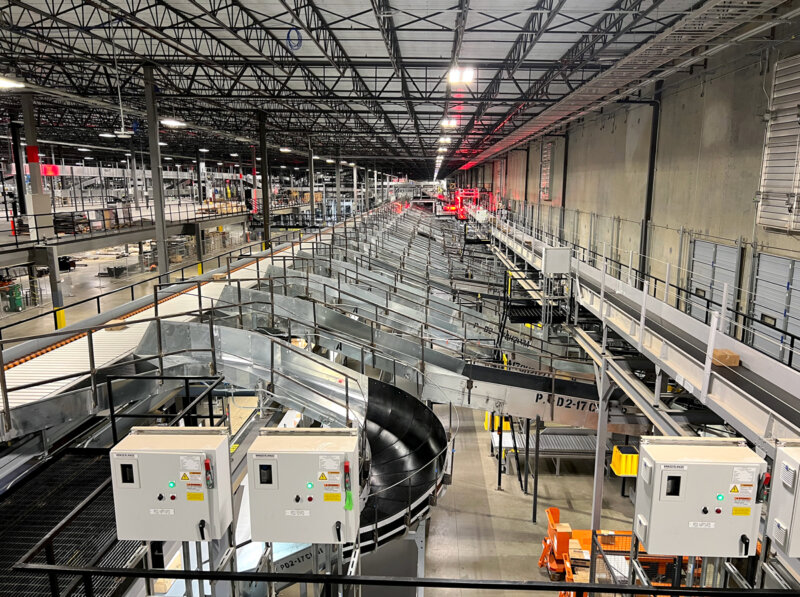
The physical movement of products from suppliers to end consumers involves complex supply chain distribution networks. Fulfillment is the final step in this process—order processing, packaging, and shipping of products to customers. The rise of e-commerce has placed new performance demands on fulfillment, requiring greater speed, accuracy, and flexibility. Companies that master omnichannel distribution and fulfillment gain a significant competitive advantage.
The expertise of firms like SilMan Industries helps retailers and distributors optimize their distribution centers to meet customer demands in an increasingly competitive e-commerce landscape.
What is Distribution, Fulfillment, and E-Commerce?
Distribution refers to the steps involved in moving and storing goods from suppliers to consumers. It encompasses the transportation, warehousing, and inventory management required to transfer products through the supply chain. Efficient distribution ensures products arrive at locations where and when they are needed to meet customer demand.
Fulfillment is the final phase of distribution—the execution of customer deliveries. It includes order processing, packaging, and shipping of products to end consumers. Fulfillment directly enables e-commerce by providing fast, accurate delivery of online purchases. Advanced fulfillment capabilities create seamless customer experiences critical for e-commerce success.
E-commerce refers to the buying and selling of goods online. The rise of e-commerce has revolutionized retail, allowing customers to purchase products through websites and mobile apps easily. The global e-commerce market continues its rapid growth and is expected to reach $8 trillion in sales by 2027. This explosion in online shopping has placed unprecedented demands on distribution and fulfillment operations.
Companies must optimize their supply chain infrastructure and processes to keep pace. Automated distribution centers, advanced material handling systems, and multichannel fulfillment networks provide the speed, efficiency, and flexibility required in today’s customer-driven e-commerce landscape. Firms like SilMan Industries support retailers to meet these new omnichannel distribution challenges.

Key Components and Technologies in Automation Systems
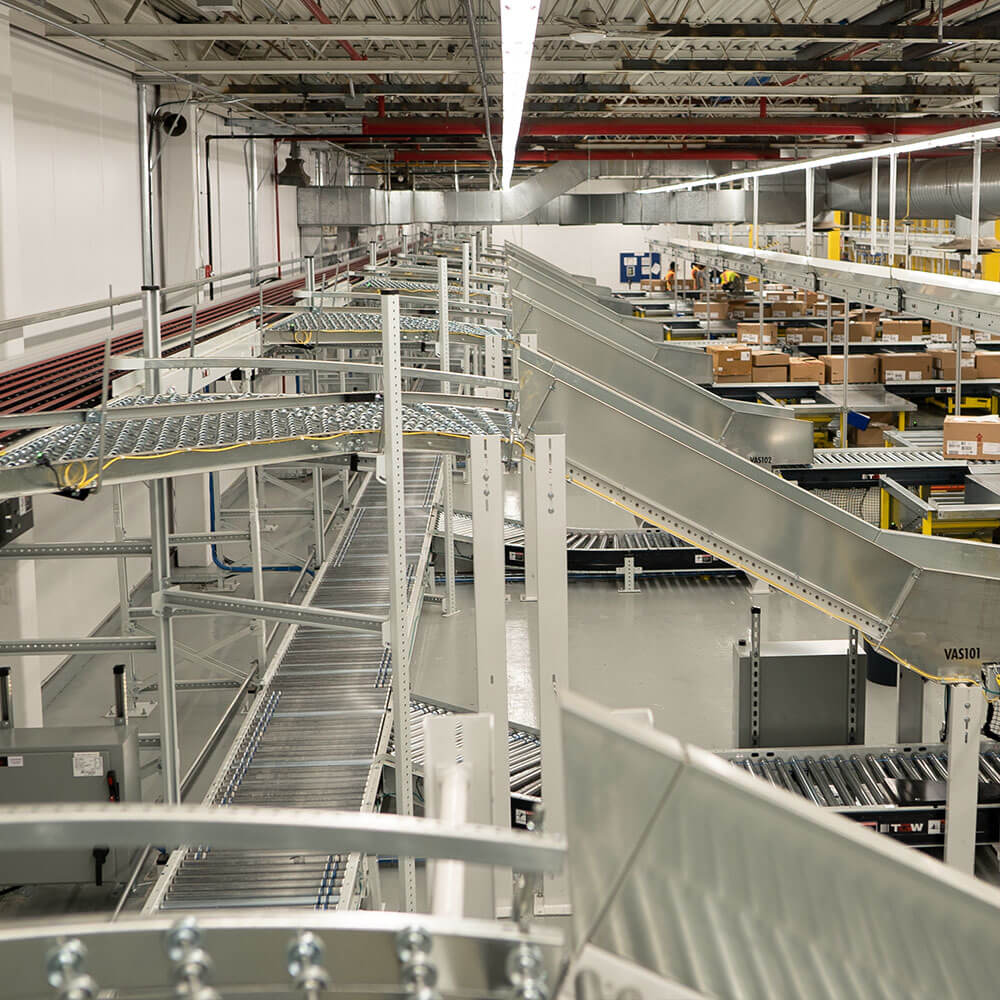
Modern distribution centers rely on advanced technologies and automated systems to achieve speed, accuracy, and efficiency. These solutions optimize material flows to meet the high-performance demands of e-commerce order fulfillment. Let’s dive into some of the key components and technologies these systems rely on.
Induction
Induction is the initial intake and sorting of products entering a facility. Induction systems provide centralized inspection stations to evaluate the condition of cartons, scan barcodes, and route inventory. Tilt-tray sorters, conveyors, and automated guided vehicles transport goods to downstream warehouse processes. Proper induction enables efficient processing and storage further down the line.
Sortation
Sortation systems organize and sequence products for order fulfillment. Cross-belt sorters use perpendicular conveyors to divert boxes to destination chutes based on barcode scans. Tilt-tray sorters rely on angled trays to slide boxes to assigned outlets. These automated sortation tools consolidate orders and optimize picking operations.
Storage
Efficient inventory storage is critical for distribution centers handling thousands of SKUs. Automated storage and retrieval systems (AS/RS) use cranes to precisely store and select pallets and totes in dense storage structures. This maximizes the use of vertical space while providing accurate, computer-controlled inventory tracking.
Picking
Picking is the process of selecting and consolidating products to fulfill orders. Batch picking groups all quantities of a product across orders. Zone picking assigns pickers to defined storage areas for better labor efficiency. Pick-to-light, put-to-light, pick-to-voice, and robotic picking leverage technology for accuracy.
Scanners/Readers
Scanners and readers provide real-time visibility and tracking. Barcode scanners digitally identify inventory for system updates. Radiofrequency identification (RFID) uses electromagnetic fields to automatically capture product data. This technology enhances warehouse automation with hands-free identification.
Packaging
Careful packaging ensures shipments arrive intact. Custom cartons, protective inserts, and sustainable materials prevent damage. Automated packaging systems weigh items, size boxes, and seal shipments to streamline fulfillment.
Shipping
The shipping process transitions packages to carriers for final delivery. Automated label printers mark boxes with addresses and tracking codes. Dimensioning systems calculate parcel volumes to select appropriate carriers and services. Manifesting software produces shipping documents and bills of lading for seamless transportation handoffs.
AGV/AMR (Automated Guided Vehicles/Autonomous Mobile Robots)
Automated guided vehicles (AGVs) and autonomous mobile robots (AMRs) are intelligent, self-driving materials handling equipment. These flexible platforms automate the internal transportation of inventory and orders between warehouse processes. AGVs and AMRs boost productivity by reducing material flow bottlenecks.
Micro-fulfillment
Micro-fulfillment centers are small, automated warehouses located close to population centers. Local micro-fulfillment enables superfast order turnarounds, sometimes within hours. The use of robotics and dense storage drives efficiency in the compressed footprint.
Mechanical, Electrical, Controls
The optimal performance of material handling systems relies on the seamless integration of mechanical equipment, electrical controls, and warehouse management software. SilMan Industries has extensive experience designing, building, integrating, installing, and supporting automated distribution and fulfillment solutions. Their turnkey approach accounts for all facets of mechanics, controls, and information systems to deliver the fastest, most accurate order processing for clients.
By leveraging the latest technologies alongside proprietary solutions, SilMan Industries helps companies maximize the potential of their distribution centers and keep pace with e-commerce growth.

The Importance of Automation in Distribution and Fulfillment
Automation refers to using advanced mechanical equipment and computerized systems to handle warehouse tasks with minimal human intervention. Automated distribution and fulfillment solutions integrate intelligent software and robots to independently perform material handling and order processing functions.
Transitioning from manual to automated operations provides transformative benefits:
- Increased Throughput: Automated systems significantly multiply the speed of material flows and order fulfillment, measured in lines processed per hour. This added velocity enables companies to meet rising e-commerce demand.
- Enhanced Accuracy: Automated scanning, tracking, picking, and sorting nearly eliminate errors in inventory counts and order fulfillment. This reduces costly adjustments, rework, and customer returns.
- Improved Use of Labor: Automating repetitive, physically-intensive tasks allows companies to assign staff to more value-added roles. Workers can focus on problem-solving and quality control.
- Cost Savings: Optimized material flows and streamlined processes reduce operational and labor expenses. Automation also improves inventory visibility for waste reduction.
By leveraging automation, retailers and distributors can achieve the throughput, accuracy, responsiveness, and cost structure required to excel in highly competitive e-commerce channels. SilMan Industries helps upgrade legacy distribution centers to automated fulfillment networks that meet customer expectations.
How Do Automation Systems Work in Warehouses?
Automated distribution centers seamlessly integrate a range of technologies and systems to execute efficient order fulfillment. This represents the culmination of years of planning, design, engineering, construction, testing, and optimization by firms like SilMan Industries.
The automated fulfillment process commonly follows this sequence:
- Inbound trucks and containers are received at shipping docks. Pallets are transported to the induction line via forklifts or automated guided vehicles.
- At induction, workers offload boxes which are scanned and sorted by product type. Conveyors route boxes to storage locations assigned by warehouse management software.
- Inventory is stored densely within automated storage and retrieval systems, optimizing available cubic footage. AS/RS cranes rapidly pick and place pallets via computerized storage logic.
- To fulfill orders, goods are transported via conveyor, AGV, or robot to picking stations. There, workers or automated picking systems select and consolidate items into customer orders.
- Packaging stations custom-size boxes, insert protective materials, apply shipping labels, and seal parcels. Dimensioning systems ensure optimal box usage to minimize shipping costs.
- Completed orders are inducted back onto the conveyor and sortation system for final routing to shipping docks. Automated guided vehicles may transport large volumes of orders to reduce backlogs.
- Orders are loaded onto outbound trucks for final delivery to customers. Integration with transportation management software enables real-time shipment tracking.
Amidst this orchestration is SilMan Industries, architecting solutions, implementing equipment, integrating controls, and providing ongoing optimizations so clients can profit from the benefits of automated distribution.
Successful Implementations Featured in This Article
SilMan Industries has delivered transformative solutions for leading retailers and distributors seeking to optimize their distribution and fulfillment operations. Their systems have increased throughput, improved accuracy, enhanced customer experiences, and delivered major cost savings.
Levi Strauss Warehouse Improvement
For Levi Strauss & Co., SilMan provided custom engineering and integration of new induction and shipping conveyors, sorters, and warehouse control software. The resulting automated fulfillment system boosted productivity while enabling faster delivery times.
thredUP Distribution Center Updates
SilMan implemented an innovative pack-out system for thredUP’s new distribution center, allowing efficient processing of polybag and cardboard shipments. The automated print-and-apply, weighing, and manifesting solution increased throughput with near-perfect order accuracy.
These case studies demonstrate SilMan Industries’ unique capabilities in architecting and integrating advanced material handling systems tailored to clients’ specific distribution, fulfillment, and e-commerce needs. By working with SilMan to map current processes and future objectives, companies gain expert guidance and proven solutions for competing at the forefront of omnichannel commerce.
Map Your Path to Distribution Excellence
Contact SilMan Industries today to discuss your distribution and fulfillment objectives and map an automation roadmap to drive growth, efficiency, and competitive differentiation. The team of engineers and trade specialists will provide strategic guidance tailored to your e-commerce fulfillment and customer delivery needs.
Are we meeting for the first time?
About SilMan Industries
SilMan Industries (previously SilMan Construction) is based in San Leandro, Calif., with Engineering and Field Operations offices in Tupelo, Miss. The firm provides integrated turnkey solutions in the Industrial, Manufacturing, Distribution, and Public Works sectors.
Notably, in 2010 SilMan Industries was contracted to dismantle and remove the NUMMI assembly line in Fremont, Calif., transport the equipment, and reinstall the system in Blue Spring, Miss., establishing Toyota Motor Manufacturing Mississippi (TMMMS). This high-visibility project ignited the company’s meteoric growth, laying the foundation for SilMan’s national service area.
For more information, please visit www.silmanindustries.com/about.