
Order Fulfillment System
PROJECT SCOPE
System Design & Integration, Consultation & Analysis, Electrical & Mechanical Engineering, Warehouse Execution system, Warehouse Controls System, Mechanical & Electrical Installation
INDUSTRY
Healthcare, Medical Devices
In this article
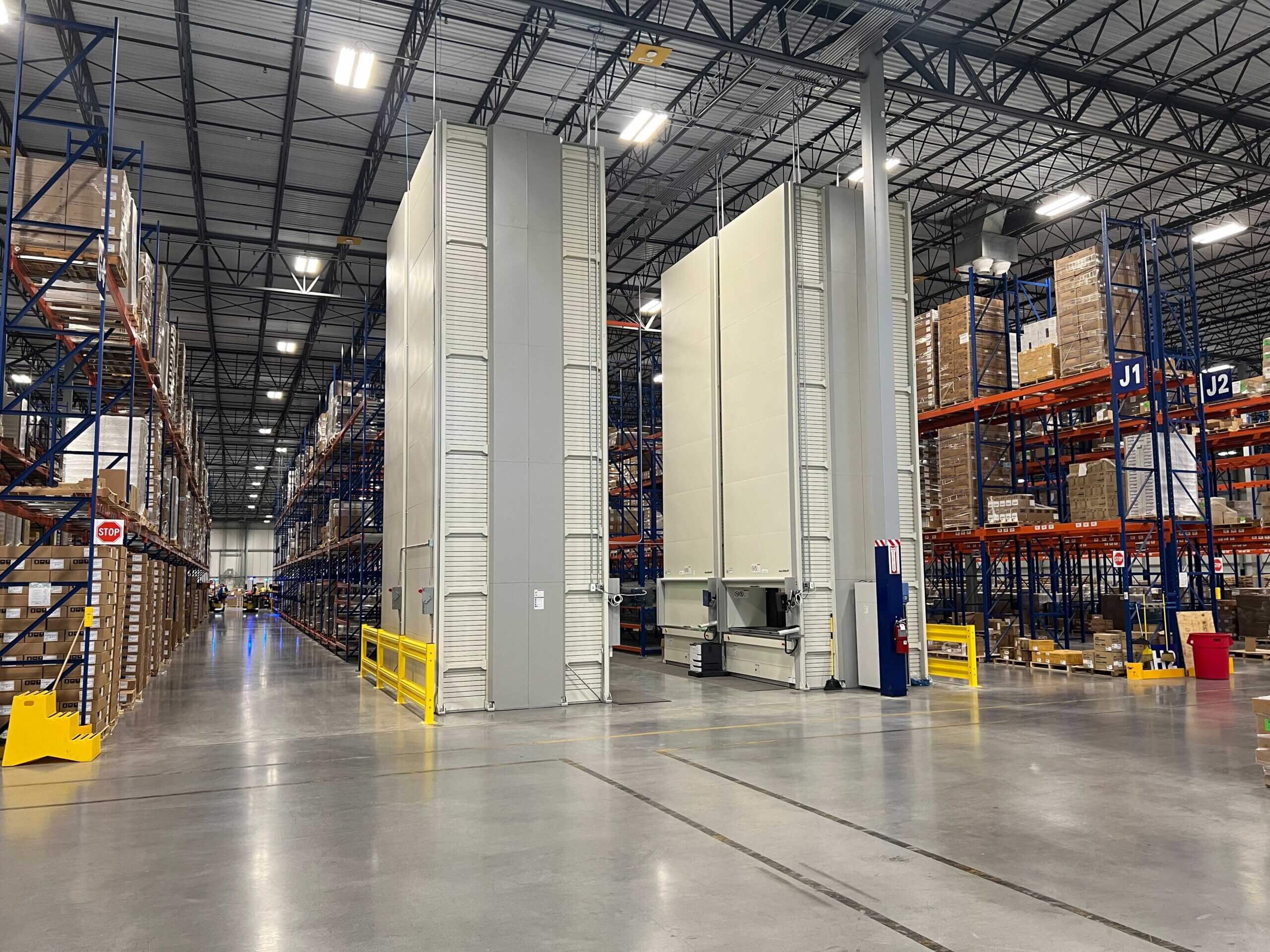
The SilMan System Integration Team designed a fully automated order fulfillment system for the spare parts operation of a leading medical equipment supplier and service provider. The new pick-and-pack system provides increased capacity, improved speed and accuracy, ergonomic work areas, and system-wide data collection. An updated WES system drives data management, with a seamless interface with warehouse equipment controls and the client’s ERP.
Automated Warehouse Picking Systems
This medical device producer is in a vibrant market sector and is experiencing continued growth. In response to these conditions, the client turned to the SilMan Engineering group to help upgrade their existing fulfillment process.
The client sought to improve service levels in their distribution facility in two areas:
- Internal: Call Center and Service Group
- External: Service Partners / Spare Parts Fulfillment
The client’s objectives for their new order fulfillment system were twofold.
First, update infrastructure to refine and expedite outbound orders and manage spare parts inventory. Specifically, to process daily orders faster, with greater accuracy, at a lower processing cost per order.
And secondly, provide their internal service teams “real-time” order information to better serve their customers. The new system would produce timely and accurate order information so that external clients could automatically receive order information and data when the order shipped.
Warehouse Picking Systems Analysis
System Design Consultation Services
The SilMan Engineering team engaged in an extensive study and analysis of the client’s overall business and existing processes to establish baseline metrics for the existing system. This undertaking produced a clear understanding of the client’s Enterprise Resource Planning (ERP) system and the exchange of information – or lack of – that occurred between the spare parts warehouse and fulfillment systems.
Speak to a key team member on this project

Meet David Rebata
For more information about this project or related topics, contact David by email or call directly at 510.409.6567.
You may also enjoy this article
The process began with one-on-one meetings with key stakeholders involved with inventory control, order processing, and the service team. These discussions focused on deficiencies of the current process and their wish list for enhancements.
We uncovered several areas for desired improvements: order processing, inventory control, and real-time data collection of order information, inventory levels, and shipping.
In the next phase of the study, the SilMan team turned their attention to the collection of current and prior years’ inventory and order data:
- How many orders could be shipped in one day?
- Profiles of orders (multi-line orders vs. single-line orders).
- What are staffing levels required to meet current demand and future demand?
- How quickly is information reaching the service group so customers could track orders once shipped?
The study was a success. The data derived from the exercise enabled SilMan to present prospective design solutions in the context of specific client objectives. Internal and external.
- New vs. existing analysis
- Design for desired through-put rates
- Increase storage and order picking efficiencies (fulfilment systems)
- Increase customer satisfaction (accelerate data / information between fulfillment systems and clients service group)
- Introduce simple automation for expediting order processing
- Provide new packaging methods (i.e. envelopes for single item orders vs. small cartons) and technology
- Automated Vertical Storage for small parts (take advantage of 30’ clear building height)
With this knowledge, SilMan Industries designed a system to improve the order fulfillment process and the flow of information needed to enhance the service levels associated with these processed orders.
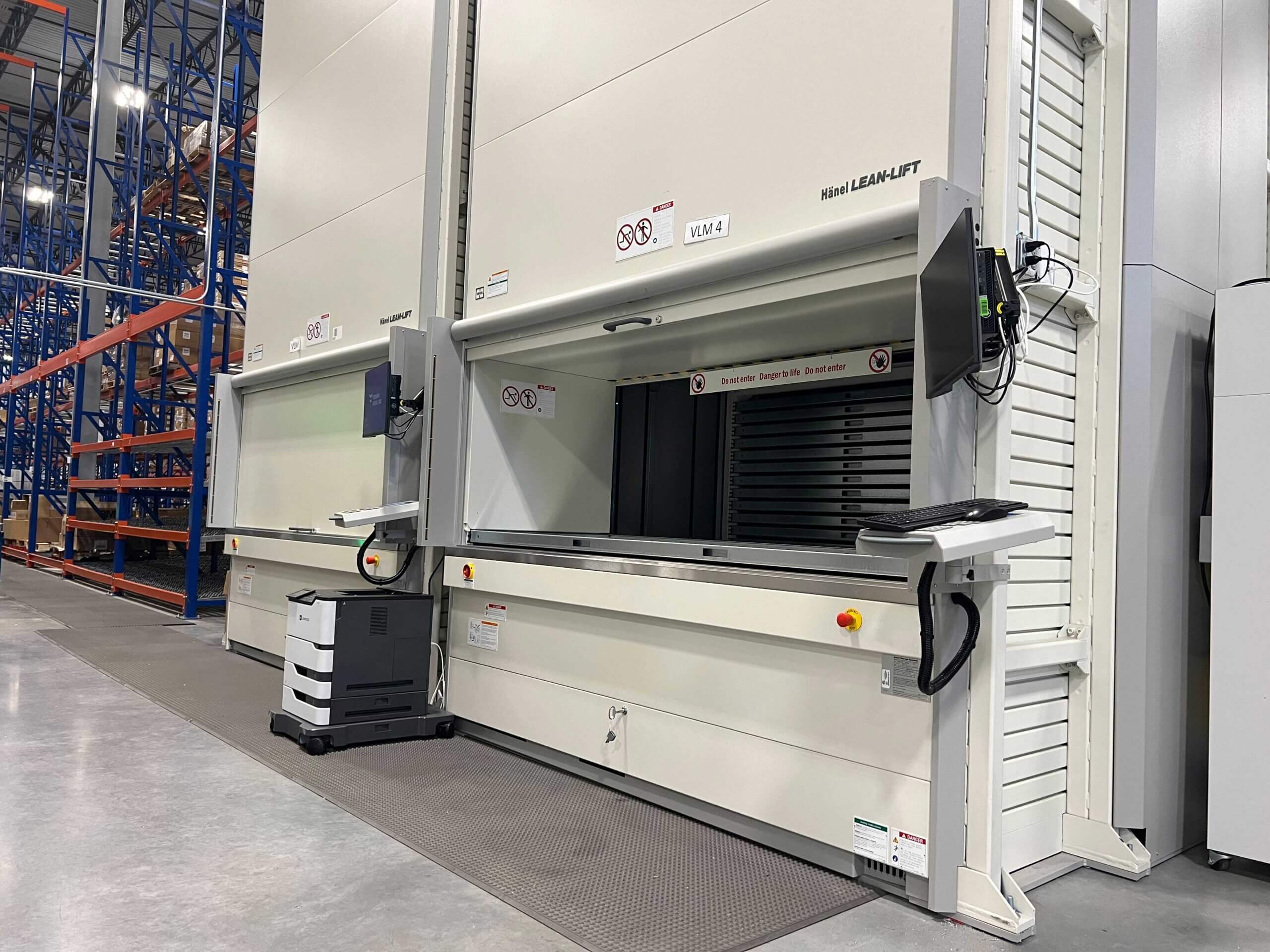
At the heart of this project’s success is the efficiency and capacity provided by Hänel Vertical Storage Solutions (Photo: SilMan Industries).
Spare Parts Fulfillment System
Conveyor System Design and Warehouse Controls
The solution accepted by the client included a variety of equipment and controls solutions.
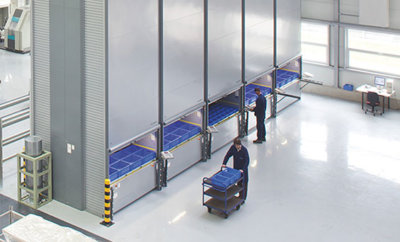
Vertical lift modules (VLM) increase the “on-hand” inventory capacity.
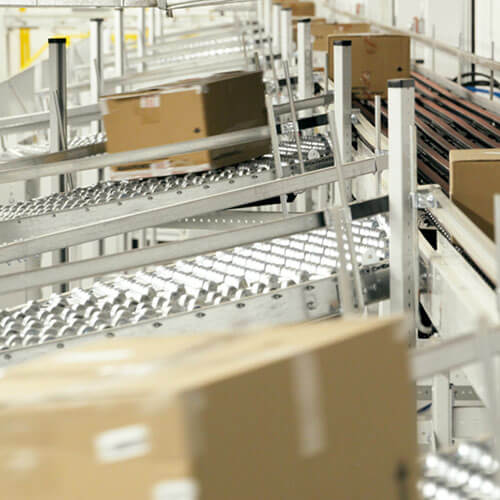
The conveyor system design expedites orders through a multi-zone picking process.
Pick to Light systems provide improved speed and accuracy of the order picking process. Moreover, the new packaging system handles smaller orders, reducing package costs.
Lastly, but most importantly, SilMan recommended a new Warehouse Execution System (WES). This system manages inventory, picking, and order processing. Furthermore, the WES solution delivers real-time order and inventory information to the operations and service groups and directly integrates with the client’s ERP.
Results: Order Fulfillment System Performance
Vertical Lift Module, Pick to Light, Put to Light Central to Improved Efficiency, Volume and Accuracy
SilMan’s design provides the client with a formidable list of key improvements to their operation:
- Increased throughput and storage capacity with Hänel vertical lift module units
- Improved accuracy and material flow with both (Lightning Pick) Pick to Light and Put to light systems
- Increased order throughput rates and accuracy
- Reduced staffing requirements with added automation
- Real-time, paperless RF device-based transactions; increased service capabilities
In addition to system functionality, the new system advances the performance of management and operation teams:
- Improved user experience:
- Ease of training and use
- Simple, system-driven user interface
- Reduced error rates
- Improved manager capabilities:
- Meaningful metrics for measuring operator performance
- Real-time dashboard with relevant KPIs
- Supervisory utilities allow for granular reporting and intuitive management
- Improved inventory and order tracking capabilities and accuracy
Learn more about the SilMan Material Handling Team. Looking for more? Take a deeper dive into distribution center optimization or our Comprehensive Guide to Efficient Parcel Handling Systems.
Appendix: Automated Fulfillment System Overview
Equipment Specifications
| Hänel Systems | Lean Lifts (4 units) |
|---|---|
| TGW Systems | IntelliROL 24V Powered Roller System |
| Lightning Pick | Pick and Put to Light |
| PAC WorldWide PacJacket | Small item packaging |
| Allen Bradley | PLC Controls |
| ID Technology | Label Printers |
| Interroll Versiflow Tracks | Case Flow |
| Dehnco Workstations | PackOut Stations |
Pick and Pack System Overview
The capacity, features, and production levels sought by the client demand a robust system management and control platform.
To accomplish this, SilMan deployed Minerva’s AWLview Warehouse Management which controls the MHE and directs all operations within the four walls of the Spare Parts Warehouse: put-away, picking, packing, shipping, and inventory management.
Additionally, the WMS directs personnel through these processes with RF mobile devices and manages all automation assets deployed in the picking and packing operations.
The transactions to be handled by WMS include:
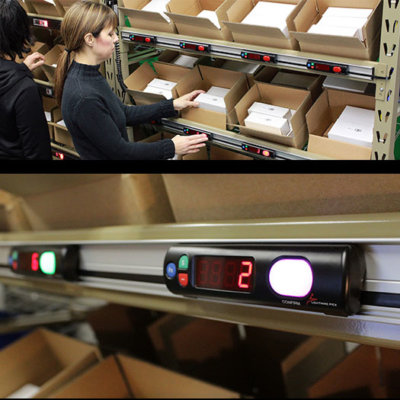
Put to Light Station (Photo credit: Lightning Pick)
- Receiving
- Directed put-away (slotting)
- Pick and pack
- Priority picks
- Replenishment based on min/max
- Interface to SAP via shared database tables
- Cycle counts and manual transfers
- Track serialized and lot-controlled product
- Track inventory at the discrete location level
- Maintain accurate inventory information through paperless transactions on wireless RF mobile handheld terminals.
And finally, WES/WCS provides the interface between all material handling equipment such as vertical lift modules, conveyance, and the Pick and Put to Light systems.
Let’s take a closer look into each stage of the order fulfillment system devised for this spare parts warehouse operation.
Item Induction: Put Away
Incoming components destined for the Spare Parts Warehouse are inducted into the WMS/WES and directed for Put-Away into four (4) distinct primary pick zones or other selected locations within the warehouse.
The WMS/WES transmits inventory location to SAP to confirm the location of each part.
This Put-Away operation occurs during second shift operations or when all the primary order picking is complete for the day.
Automated Order Processing: Pick to Light, Put to Light
SAP provides order information.
There are three distinct order types:
- Single line, single item: multiple orders in a single tote
- Multi-line, multi-item: single order in a single tote
- Large orders/pallet picks: multiple totes for a single order
All orders will be processed, picked, and placed into totes as they travel through four pick zones.
All orders move through four pick zones where users utilize RF devices to scan totes (LPNs) to “marry” each tote, or groups of totes, to a specific order.
Users pick items from the Hänel Vertical Lift Modules for placement in a specific order tote. “Pick to Light” functionality allows users to expedite the picking process while maintaining accuracy. “Put Lights” located directly above each order tote directs where to place picked items and the quantity required.
The conveyor system logic maintains the integrity of each tote batch as they pass through the four pick zones. This “Zone Routing” solution keeps each group of totes in one distinct “train” through to its final destination in either a Pack Out Station or transfer to the PacJacket station.
Pack Out Process
The new system features two Pack Out processes.
Type 1 Orders (single line, single item): conveyor logic directs these orders to the PacJacket packaging area for packaging and labeling.
Users remove orders from the tote and scan LPN before placing them in a mailer pouch. The PacJacket seals the mailer and applies a shipping label.
The PacJacket can process up to 20+ orders per minute.
Type 2 Orders (multi-line, multi-item): single order totes journey to individual pack-out stations. Users then remove the items, scan them (QA check), and place them in a shipping carton. The cartons are sealed and transported via conveyor to manifest stations. There the cartons are weighed, and shipping labels applied.
Once the shipping label is applied, users will place cartons on a conveyor destined for shipping. Cartons are sorted and placed on the appropriate shipper pallet (UPS, Federal Express, DHL, USPS, etc.).
About SilMan Industries
SilMan Industries (formerly SilMan Construction) is based in San Leandro, California, with Engineering and Field Operations offices in Tupelo, Mississippi. The firm provides integrated turnkey solutions in the Industrial, Manufacturing, Distribution, and Public Works sectors.
Notably, in 2010, SilMan Industries was contracted to dismantle and transport the NUMMI assembly line in Fremont, Calif., transport the equipment, and reinstall the system in Blue Springs, Miss., establishing Toyota Motor Manufacturing Mississippi (TMMMS). This high-visibility project ignited the company’s meteoric growth, laying the foundation for SilMan’s national service area.
For more information, please visit www.silmanindustries.com/about.

SilMan’s renowned in-house team of system integrators, engineers, and controls professionals provide industry-leading material handling solutions. In addition to industry-leading order fulfillment system design, they are noted for their communications and transparency throughout the development and execution of projects. The multiple-skilled team has a national footprint, providing materials handling systems and solutions throughout the United States, serving all cities. This includes Oakland. Los Angeles. Phoenix. Dallas. Chicago. Atlanta. Bowling Green. Charlotte. Huntsville. Indianapolis. Seattle. Kansas City.
Frequently Asked Questions for Order Fulfillment System
What is the main benefit of using a Vertical Lift Module (VLM) in order fulfillment?
The primary benefit of a VLM, like the Hänel Lean Lifts, is maximizing storage capacity by utilizing the clear vertical height of a building. "On-hand" inventory can be increased, and parts can be brought directly to the picker, improving ergonomics and reducing walking time for the worker. As a result, throughput and picking accuracy can be drastically improved for spare parts fulfillment.
How does a Warehouse Execution System (WES) differ from a Warehouse Management System (WMS)?
A WES focuses on real-time task management and execution within the warehouse, directly controlling automation equipment (like conveyors and Pick to Light). It often sits between a WMS (which handles overall inventory and labor) and the controls system, providing a superior level of real-time data and system optimization for fulfillment operations.
What are Pick to Light and Put to Light systems, and how do they improve accuracy?
Pick to Light directs the user to the correct storage location and displays the exact quantity to pick. Put to Light guides the user on where to place the picked item (e.g., into a specific order tote). Both systems utilize visual queues to create a paperless, system-driven process and significantly reduce human error and improve order throughput rates.
