
Automated Robotic Palletizing System for Distribution and Fulfillment Centers
PROJECT SCOPE
System Design & Engineering, Project Management, Robotic equipment and programming, Mechanical & Electrical Installation
INDUSTRY
Fulfillment
SilMan Industries provided an automated robotic palletizing system in a fulfillment center for a global leader in the entertainment and amusement industries.
Robotic Palletizing Systems
Design & Implementation
The SilMan System Integration Team managed all aspects of the automated palletizing project, including engineering, procurement, robot and controls programming, electrical, mechanical, safety, and scheduling. SilMan engineers also provided design and drawings for improvements to the facility to accept the new system.
The operation transfers packages on pallets from the production floor to robotic cells, which pick and place, repalletizing cartons to shipping pallets.
Implementation and installation of the project included procurement of material and equipment to develop all hardware designs, PLC and HMI program development, Panel Fabrication, and installation.
The Palletizing Operation
The process is initiated with the delivery of outgoing stock to an induction station by a forklift operator.
The system includes two conveyance routes:
- Production pallets to robot cells
- Outbound to shipping, including shrink wrap of pallet loads
An automated stacking and de-stacking solution for work-in-process (WIP) pallets is provided, along with return routing for empty pallets back to the production floor from the robotic cells.
The centerpiece of the solution is the two robotic cells. Robot performance includes vision, pallet de-stack, pallet shuttle transport cart, WIP functions, auto-labeling, and multiple configurations of product orientation on pallets. Once palletized, the re-palletized product is forwarded to shipping.
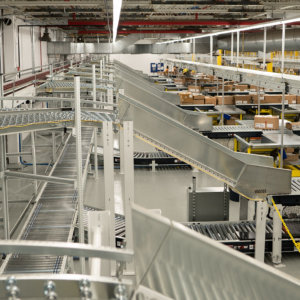
Movement of pallets is automated: completed pallets are removed from the robot cell area, labeled, wrapped, and delivered for shipping via conveyor. Empty pallets are returned to the warehouse, also via pallet conveyors.
Speak to a key team member on this project

Meet David Rebata
For more information about this project or related topics, contact David by email or call directly at 510.409.6567.
You may also enjoy this article
Engineering
Robotic Palletizing Systems Engineering: From Concept to Controls
Our Tupelo-based engineering team, led by Keith Hiyama, provided all systems design (mechanical, electrical) and required building modifications to accommodate the new system.
- Conceptual drawings
- Final engineering of Robotic Cells, Conveyance, and Controls
- Electrical engineering for panels and field devices
- Controls engineering for HMI interface
- Electrical engineering of machine handshakes
- Mechanical and Electrical Installation drawings
- Facility improvements
Robotics: Equipment and Programming
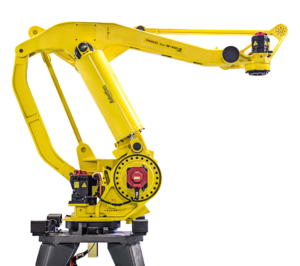
The Fanuc M-410+B series was selected for the palletizing system implementation. This model was the ideal choice because of its high degree of variability, offering the ability to manage changing payloads and weights at high-speeds.
The M-410+B robot series is + R Vision ready and was programmed for the following actions:
- Detection of height of workpieces
- Discrimination of part-size or type
- Visual inspection
- Sorting of workpieces
- Depalletizing the load on a received pallet
- Motion optimization
SilMan Engineering provided end-to-end support for this project:
- Electrical and Mechanical Engineering
- Controls and Robotic Programming
- Inter-Logistics Planning and Facility Design
- Project Management
Challenges
The initial challenge was the internal logistics/floor plan of the new operation. That is, reimagining the existing space as a new high-tech fulfillment operation.
However, it was the highly customized delivery specifications of the company’s client base that demanded the most imagination and brainpower from our engineering team.
A variety of pallet sizes and configuration patterns based on product identifiers are required by each destination state and distribution location type.
These variations at the point of delivery require thousands of iterations of product placement patterns on shipping pallets. All which needed to be performed by the robots in real-time as products are scanned and picked.
ROI on Automation
The solution described above provides a classic example of the ROI of automation.
The previous operation required five employees for each shift, three shifts a day, seven days a week. In the recent environment wave of labor shortages, this placed tremendous pressure on recruitment efforts. Not to mention the constantly rising costs of labor, payroll taxes, and insurance.
With the new system, only one team member, a fork operator, is needed for each shift – a savings of 12 employees.
This solution creates opportunities to reassign team members to safer, less repetitive work, and is a win for all parties:
- Reduced time and effort for recruitment
- Improved working conditions and opportunities for employees
- Lower daily operating costs
- High-speed, consistent performance
- Reduced errors in final shipping
Photo Gallery: Robotic Palletizing Cells
Click photos for full screen view.
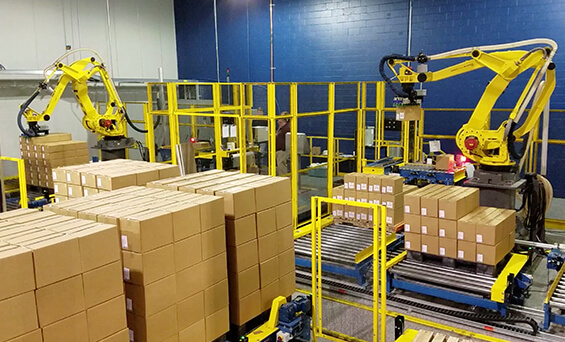
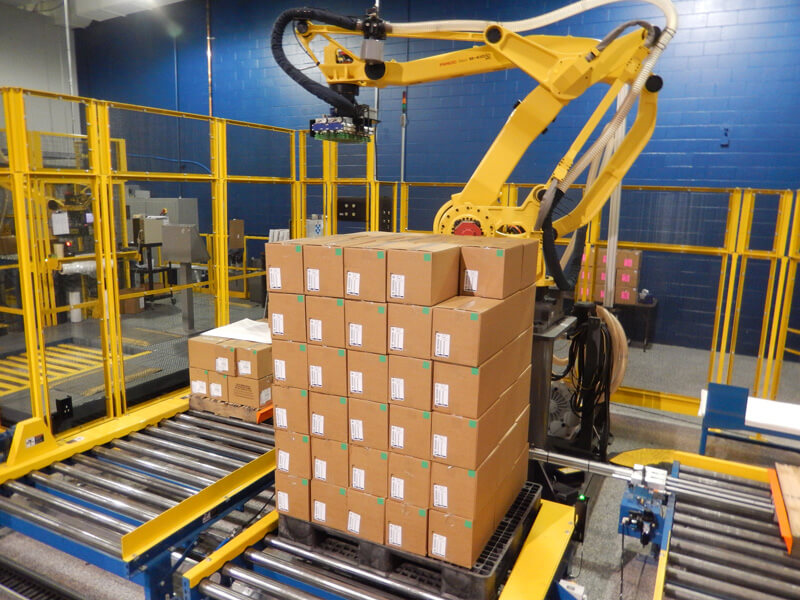
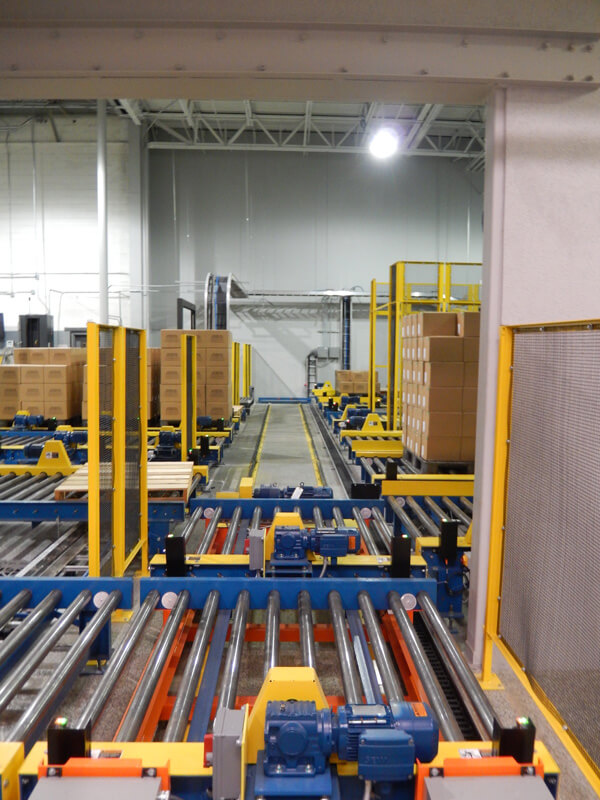
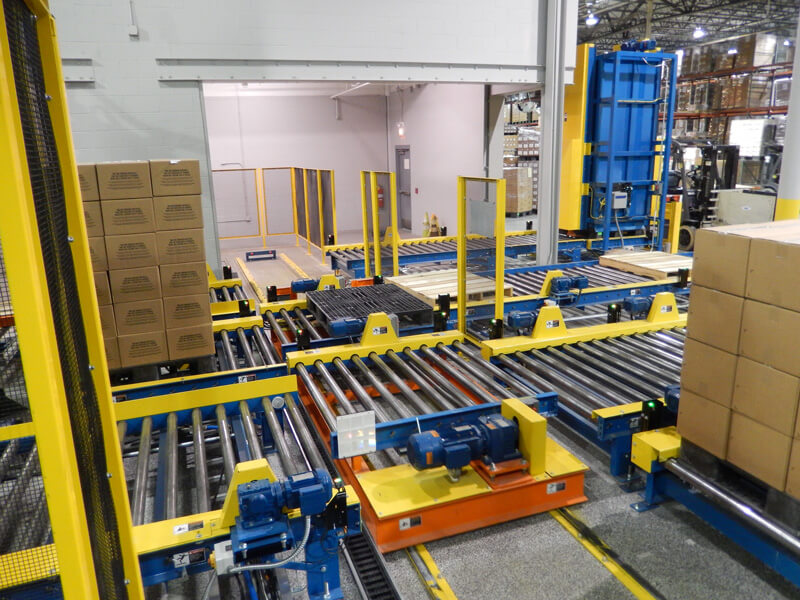
The palletizing system at work: automated conveyance and two Fanuc robotic cells
Automation Project Success
Robotic Palletizing Systems drive efficiency and savings
SilMan’s in-house engineering and project management provided unique contributions to the successful outcome of this project: Improved Performance, Reduced Costs
Key team members in achieving these results are:
- Ray Hawkins: Robotic Tool Design, Programming, And Installation
- Harrison Rupp: Project Management
- Tommy Ethridge: Account Management
- SilMan Specialty Trades Services: Mechanical, Electrical
Lastly, the only true measure of success is a satisfied customer.
Our client is pleased with the speed, efficiency, and cost improvements in their new system.
We also enjoyed a close, collaborative relationship with the client’s project leadership, particularly in light of the top-to-bottom updates of facility, equipment, and technology that were proposed and executed.
Looking for more? Take a deeper dive into distribution center optimization or our Comprehensive Guide to Efficient Parcel Handling Systems.
Learn more about SilMan’s Specialty Trades Services and their high-performing solutions for Equipment and Controls, Industrial Facilities, and Building Systems.
About the Company
SilMan Industries (previously SilMan Construction) is based in San Leandro, Calif., with Engineering and Field Operations offices in Tupelo, Miss. The firm provides integrated turnkey solutions in the Industrial, Manufacturing, Distribution, and Public Works sectors.
Notably, in 2010 SilMan Industries was contracted to dismantle and remove the NUMMI assembly line in Fremont, Calif., transport the equipment, and reinstall the system in Blue Spring, Miss., establishing Toyota Motor Manufacturing Mississippi (TMMMS). This high-visibility project ignited the company’s meteoric growth, laying the foundation for SilMan’s national service area.
For more information, please visit www.silmanindustries.com/about.
Frequently Asked Questions for Automated Robotic Palletizing
How quickly does a robotic palletizing system deliver a Return on Investment (ROI)?
The Return on Investment (ROI) for robotic palletizing is rapid, primarily driven by massive reductions in labor costs and improved efficiency. In this project, the automated system replaced the manual requirement of five employees per shift across three shifts, seven days a week, resulting in a net labor saving of 12 employees. In many cases, team members can be moved to safer, higher-value work. A further benefit was the reduction or elimination of costs associated with recruitment, rising labor wages, and liability from repetitive, heavy-lifting injuries.
Can a robotic palletizing system handle multiple pallet sizes and complex, variable stacking patterns?
Yes, modern robotic palletizers are highly flexible and capable of managing complex logistical demands. The system was engineered to manage customized delivery specifications, including a variety of pallet sizes, and is capable of executing thousands of unique product placement patterns in real-time. The Fanuc M-410+B robot and its programming ensure the product orientation and stacking stability are correct for each specific destination and distribution location, guaranteeing high-quality load consistency.
What does the complete implementation process for an automated robotic palletizer involve?
The implementation of a robotic palletizing system requires comprehensive System Integration across engineering, robotics, and construction trades. SilMan's unified approach provides turnkey solution encompassing system design, electrical/mechanical engineering, controls programming, and both mechanical and electrical installation. This end-to-end scope includes material procurement, PLC/HMI program development, panel fabrication, safety integration, and facility modifications to seamlessly integrate the new technology with existing upstream and downstream conveyance.
