
Specialty Trade Services
Industrial Building Systems
Service and Maintenance Strategies for Efficient Facility Operations
Industrial facilities are the backbone of manufacturing, distribution, and production operations. Well-designed plants with robust structural integrity, reliable utilities, efficient layouts, and modern equipment enable companies to meet production targets while minimizing costs safely.
However, aging infrastructure, changing technologies, and growth demands make proactive industrial facility management imperative. Partnering with an expert service provider delivers tremendous value via turnkey upgrades, retrofits, maintenance, and repairs.
SilMan Industries offers comprehensive solutions for holistically enhancing industrial facilities. With extensive experience across facility construction, equipment installation, process improvements, and maintenance programs, SilMan’s project management and skilled trade teams provide an integrated blueprint to address safety, sustainability, productivity, and budget realities.
Understanding Industrial Building Systems
Industrial facilities comprise multiple structural, mechanical, and electrical systems working in concert to enable business operations. Four key components include:
- Conveyance Systems: Material handling equipment like conveyors, lifts, and hoists transport raw materials and finished goods between loading docks, storage areas, and processing stations. Their reliability impacts workflow efficiency.
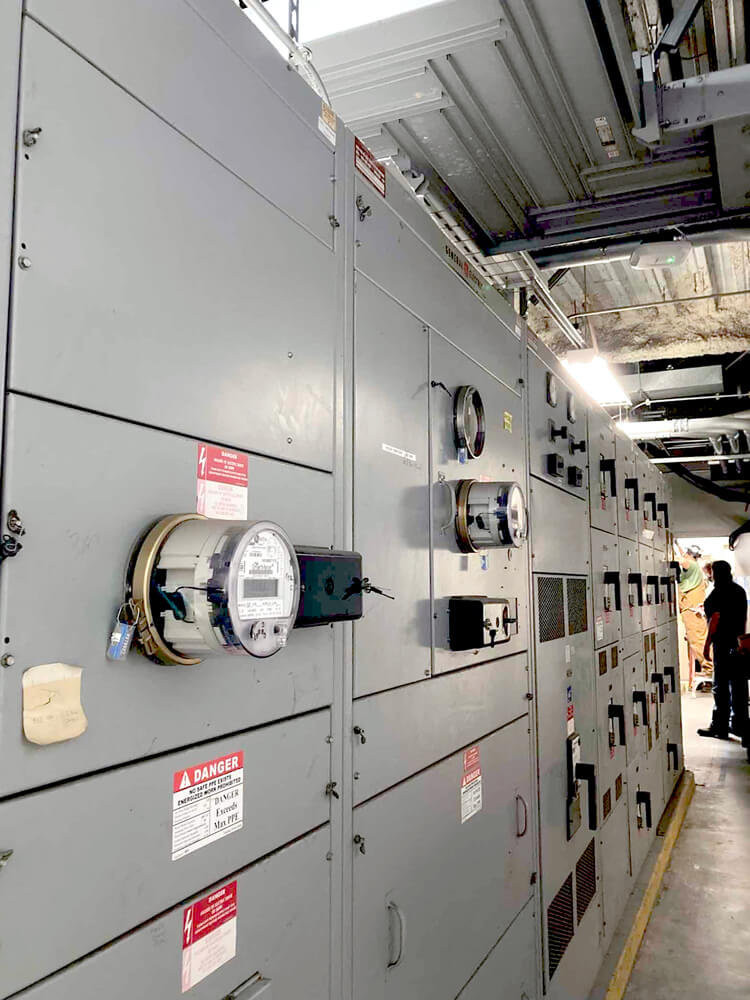
- Electrical Infrastructure: Power distribution systems that supply electricity safely to production equipment, lighting, and HVAC systems are critical, as are data cabling and networks that connect sensors, controls, and software.
- HVAC Systems: Heating, ventilation, and air conditioning are vital for maintaining cleanroom-type environments and employee safety in harsh industrial settings involving dust, fumes, or extreme temperatures.
- Fire & Safety Systems: Fire suppression equipment, emergency lighting/signage, alarm systems, and code compliance protect staff, property, and continuity during fire or other hazardous scenarios.
An integrated building system approach examines interactions between these individual components. For example, conveyance systems work with power infrastructure and software controls to enable efficient material movement based on production planning. The goal is holistic optimization of facility performance focused on the organization’s operations.
Key benefits of integrated building solutions include improved energy efficiency, staff safety, and productivity through data-driven decision-making and minimized equipment downtimes.
Conveyance Systems
Conveyance systems such as conveyors, hoists, and lifts are workhorses for material handling in industrial facilities. They transport raw ingredients, components, and finished products between receiving, storage areas, production lines, and shipping zones.
Different types suited for weight loads and material types include belt conveyors, roller conveyors, pneumatic tube systems, freight elevators, jib cranes, and gantry cranes. Choosing the right solutions to integrate with docks, racks, and machinery is vital.
Safety and compliance considerations around equipment guarding, stop buttons, clearance space, maintenance access, gears, and pulls also come into play. Facilities aim for seamless coordination between conveyance modules, sensors, and software systems.
For example, automatically rerouting product flows based on real-time equipment diagnostics data helps minimize downtimes. Integrating conveyor controls with inventory management and production scheduling systems enables smart material movement that is aligned with operational needs.
When evaluating conveyance improvement projects, leaders must balance fast ROI realization through uptime and efficiency gains with adaptability to handle future process changes or volume spikes. A holistic view of material handling elements across industrial facilities is key to scalable growth.
SilMan spends A LOT of time with Material Handling Systems. And since we touch the entire design, implementation, and service cycle of this equipment, you can bet our Safety Team has serious chops on this topic. We have prevailed upon them to collect their insights into conveyor safety for owners and users.
Electrical and Data Systems
Industrial facilities are power-intensive environments with production machinery, climate control systems, lighting, and computing hardware running nonstop. Robust electrical infrastructure distributes adequate power reliably through switchgear, transformers, UPS systems, motor control centers, and power panels.
Redundant utility feeds, backup generators, and compartmentalized distribution prevent outages. Monitoring systems provide insight into energy consumption by process or location to optimize usage. Scalable power capacity also allows for adding new loads.
Smart manufacturing leverages data pervasively for process automation and insight. Industrial Ethernet and WiFi connectivity enable the exchange of information from sensors, production equipment, quality management systems, and building management software. Data centers, telecom rooms, and cabling infrastructure adequately support IoT, while analytics software derives operational intelligence.
For example, automating quality testing by integrating sensors with statistical process control software prevents quality excursions. Production scheduling systems can align energy usage with time-of-day rates for savings. A solid digital foundation working symbiotically with electrical systems powers the modern industrial facility. Reliability, speed, scalability, and cybersecurity are key.
HVAC Systems
Heating, ventilation, and air conditioning form the lungs of an industrial facility. HVAC maintains strict temperature, humidity, and air quality levels for sensitive manufacturing processes, safeguards products or components vulnerable to environmental conditions, and creates comfortable working conditions for employees.
Choosing HVAC systems tailored for the application balances initial costs with operating efficiency. Air handlers, chillers, rooftop units with economizers, variable frequency drives, and high-efficiency filters provide precision control—zoned systems only condition occupied areas. Ductwork design distributes conditioned air optimally.
Integrating HVAC with the rest of the facility magnifies benefits. For example, linking HVAC to the building management system allows monitoring hundreds of sensors in real-time to detect issues early. Energy management systems align HVAC runtime to production schedules. Automated alerts trigger when room conditions deviate from setpoints.
Proper HVAC specification upfront, coupled with data-driven optimization during operations, ensures ideal indoor environmental quality. These efforts keep workers productive and products defect-free. Well-designed systems also minimize lifecycle costs through energy savings and reduced maintenance.
Fire and Safety Systems
Fire protection and life safety systems shield industrial facilities, people, and operations from harm during emergencies. Fire alarms, sprinklers, clean agent suppression systems, fire pumps, signage, and emergency lighting comprise a first line of defense and proper exit design.
Integrating safety systems with other facility infrastructure boosts protection. For example, linking fire alarms to HVAC systems enables automated smoke evacuation and compartmentalization to prevent spread. Alarms can also automatically shut down equipment. EHS systems get real-time alerts for quicker incident response.
Communication with first responders, executives, and employees is also vital during fires. Dedicated networks independent of regular IT infrastructure maintain connectivity. Similarly, backing up fire system servers, controllers, and power supplies provides resiliency.
Compliance considerations around egress, fail-safe operation, maintenance procedures, and testing also come into play to protect against legal issues. Ultimately, a layered, coordinated approach spanning policies, equipment maintenance, emergency response, reporting, and drills ensures safety and continuity.
You may also enjoy this article.
Maintenance, Repair, and Retrofit
Industrial infrastructure requires proper lifecycle management for peak performance at minimized costs. Preventive maintenance reduces failures, such as periodic inspections, parts replacement, and equipment calibration. Repairing worn components may suffice when damage is limited.
However, upgrading entire systems through retrofits or replacement future-proofs operations. For example, moving from pneumatic conveyors to motorized rollers boosts efficiency. Switching older variable air volume HVAC systems to modern variable refrigerant flow allows precision temperature control.
The key is objectively evaluating upgrade ROIs, balancing capital outlay with tangible and intangible benefits like:
- Increased production capacity
- Energy savings
- Reduced downtimes
- Improved employee safety
- Simplified maintenance
Of course, factors like payback period, system longevity, flexibility for future expansion, and compliance also merit consideration. A data-driven approach examining leading indicators like utilization rates, MTBF, or error patterns identifies correct lifecycle milestones for equipment replacement. These safeguards keep infrastructure delivering maximum value.
Facility Updates, Remodel, Retrofit, and Investment Calculus
Upgrading decades-old industrial plants prevents obsolescence while improving safety, sustainability, and productivity. Key initiatives include:
Retrofits
Incorporating new technologies like IoT sensors, industrial ethernet, or robotics into existing infrastructure without needing new construction.
Remodels
Reconfiguring layouts, work cells, material flows, lighting, or interiors to ease congestion, minimize material travel distance, and better integrate upgraded equipment or additional capacity.
ROI Calculations
Quantifying potential downtime avoidance, increased output, lower regulatory risks, reduced waste disposal fees, energy savings, and other benefits against required upgrade investments.
Optimization
Leveraging computer simulation tools to test different layouts and process flows digitally identifies the best alternatives before disruption.
Proactive modernization initiatives keep facilities viable despite changing needs and technologies while providing positive returns on investment in the long term.
Implementing Integrated Building Solutions
Achieving integrated building systems requires a systematic approach encompassing assessment, planning, execution, and ongoing improvement:
Comprehensive Facility Audits
A detailed inspection of all structural, mechanical, and electrical systems using checklists customized for the industry and building type helps accurately identify integration gaps, performance bottlenecks, and upgrade needs. The audits examine interactions between material handling, HVAC, and fire systems, while energy audits complement by revealing efficiency opportunities.
Careful Partner Selection
The right partner brings deep, cross-disciplinary expertise around equipment, controls, and data systems to provide unbiased guidance. An ideal partner understands industrial facilities as living organisms rather than static structures. Holistic thinking prevents fragmented, suboptimal point solutions that fail to improve overall ecosystem performance. Such a partner also ensures careful ongoing project coordination across disciplines.
Measurement Systems & Continuous Improvement
With upgrades complete, relevant quantifiable metrics like production output, energy consumed per unit, equipment utilization rates, mean time between failures, and overall system uptime objectively measure infrastructure performance. Historical data aids trend analysis to identify early warning signs of potential failures. Continuous data feeds help uncover new improvement opportunities through analytics and machine learning.
Built-in Future Scalability
Reimagined facilities incorporate flexibility for future growth or process changes right from construction. Building systems with modularity, quick disconnects, and sufficient buffer capacity allows seamlessly accommodating new equipment, production lines, or plant expansions through minor tweaks rather than disruptive revamps. Data and electrical infrastructure enable easy plug-and-play upgrades.
Integrated building system implementations demand substantial technical aptitude, project management, and change leadership skills to drive adoption. An ideal solutions partner understands this balance while bringing an entrepreneurial mindset that maximizes client ROI from the upgrades.
Realize Systems Efficiency with SilMan Industries
Industrial facilities are complex ecosystems with multiple structural, electrical, and mechanical systems interacting to enable business operations. Fragmented upgrades fail to provide a lasting impact. Integrated building solutions take a holistic approach to transforming facilities via seamless systems convergence.
Partnering with Silman Industries brings the full force of the company’s in-house engineering and project management to help facility owners, plant engineers, and operations leaders reimagine their physical infrastructures. With a plan in place, SilMan’s self-performing Civil, Mechanical, and Electrical teams are poised to seamlessly implement the solutions. All SilMan field operations are supported by resident industrial safety professionals.
The expertise of this “super team” spans conveyance, power, HVAC, and safety systems, including integrating equipment controls and software for unified functionality.
By adopting a lifecycle mindset focused on scalability, SilMan future-proofs client investments. Quantifiable productivity, safety, compliance, and energy efficiency improvements result.
Are we meeting for the first time?
About SilMan Industries
SilMan Industries (previously SilMan Construction) is based in San Leandro, Calif., with Engineering and Field Operations offices in Tupelo, Miss. The firm provides integrated turnkey solutions in the Industrial, Manufacturing, Distribution, and Public Works sectors.
Notably, in 2010 SilMan Industries was contracted to dismantle and remove the NUMMI assembly line in Fremont, Calif., transport the equipment, and reinstall the system in Blue Spring, Miss., establishing Toyota Motor Manufacturing Mississippi (TMMMS). This high-visibility project ignited the company’s meteoric growth, laying the foundation for SilMan’s national service area.
For more information, please visit www.silmanindustries.com/about.

Frequently Asked Questions for Building Systems
What is the difference between a specialty trade contractor and a general contractor?
A general contractor typically manages a project using various subcontractors for specialized work. In contrast, a specialty trade contractor has the in-house expertise and a self-performing team for a specific range of services, such as industrial electrical, mechanical, and civil work. This "one-team" approach streamlines communication, improves quality control, and often results in faster project completion.
What are the key benefits of an integrated industrial building systems approach?
An integrated approach ensures that all components of a facility—including conveyance systems, electrical infrastructure, HVAC, and fire & safety—are designed and implemented to work together holistically. This method results in a more efficient and safer facility, reduces future maintenance costs, and increases overall productivity by preventing issues that arise from mismatched or uncoordinated systems.
Can SilMan Industries help retrofit or upgrade an older industrial facility?
Yes. SilMan specializes in turnkey upgrades and retrofits for existing industrial facilities. We perform comprehensive facility audits to identify opportunities for improvement, and then our skilled mechanical and electrical teams can replace or modernize outdated systems, ensuring the seamless integration of new technology with minimal operational disruption.
