
Engineering Excellence at 30,000 Feet:
SilMan Industries Delivers Critical Ground Operations Infrastructure for San Diego Air Cargo Transfer Terminal
CLIENT
Leading Parcel Carrier
INDUSTRY
Airport Operations
Air Cargo Terminal
Public Works
PROJECT SCOPE
Civil Construction, Millwright/Mechanical & Electrical (Primary Power, Panels, Controls), Project Management
Article Summary: ULD Handling and Truck Deck Facility
In the high-stakes world of intermodal logistics, every minute counts. When packages move through the global supply chain at jet speed, ground operations must match that pace with flawless precision. With rising demand for their services, the parcel carrier’s air cargo terminal at San Diego International Airport faced a critical infrastructure gap that threatened to bottleneck operations.
The challenge: to create a state-of-the-art ULD transfer terminal that seamlessly integrates ground operations with existing air operations, while navigating the logistical, administrative, and regulatory complexities of a major metropolitan airport.
This case study examines how SilMan Industries transformed a challenging brownfield site into a cutting-edge cargo handling facility, demonstrating why major logistics providers trust SilMan with their most critical airport infrastructure projects. From navigating unexpected utility challenges to executing a complex primary power installation that crossed public roadways, this project showcases the full spectrum of SilMan’s engineering, permitting, civil, mechanical, and electrical services —and their ability to deliver results when flexibility and expertise matter most.
Project Overview: Transforming Air Cargo Ground Operations
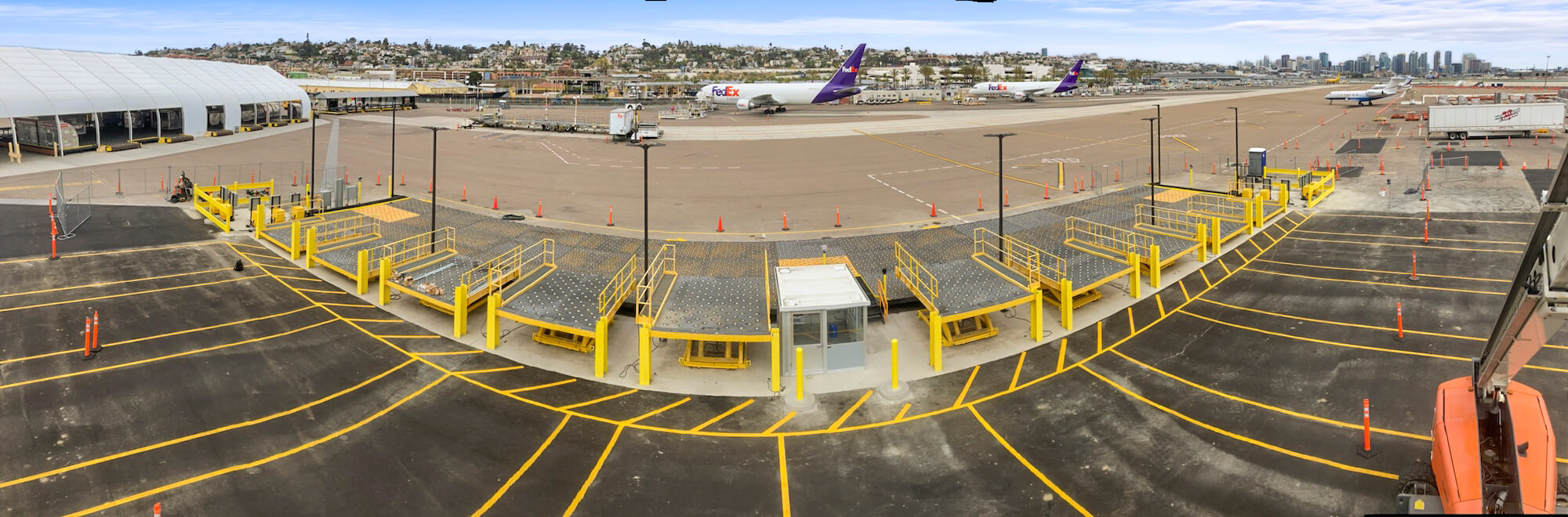
The San Diego cargo handling and truck deck project represented a comprehensive infrastructure development at one of Southern California’s busiest air cargo facilities. The scope extended far beyond simple equipment installation, encompassing civil engineering, structural construction, sophisticated material handling systems, and complex electrical distribution—all while maintaining continuous cargo operations at an active international airport.
Project Specifications at a Glance
Location: San Diego International Airport Air Cargo Facility
Client: Leading Global Parcel Carrier
Key Metrics:
Speak to a key team member on this project

Meet Jeff Piazza.
For more information about this project or related topics, contact Jeff by email or call directly at 925.984.0062.
You may also enjoy this article
- 2,700 square feet of reinforced concrete deck
- 10 heavy-duty scissor lifts with 156″ x 120″ platforms
- 41 caster deck positions (108″ x 132″ each)
- 3 integrated 20,000-pound capacity scales
- Complete electrical distribution system
- Comprehensive safety and access infrastructure
The Challenge: Building in an Active Airport Environment
Operating within an airport environment presents unique challenges to our Specialty Trade Services Team that extend beyond typical construction projects. Every aspect of the work required coordination with multiple stakeholders:
- Port Authority Requirements: Continuous communication and compliance with airport operations
- Security Protocols: SANR (Security Approval/Acknowledgement Not Required) designation required specific procedures
- Operational Continuity: Zero disruption to ongoing cargo operations
- Regulatory Compliance: Navigation of federal, state, and local requirements
- Infrastructure Integration: Seamless connection to existing sort center facilities
Phase 1: Engineering and Permitting Excellence
SilMan’s approach began with comprehensive engineering and planning, recognizing that success in airport environments demands meticulous preparation. The engineering phase commenced with a detailed site review on July 30, 2020, establishing the baseline for all subsequent design work.
Integrated Design Approach
The engineering team developed a complete permit submittal package that addressed every aspect of the project:
Civil and Structural Engineering
- Design specifications for Division 03 Concrete, Division 31 Earthwork, and Division 32 Exterior Improvements
- Detailed calculations for a 2,700 square-foot concrete slab featuring 4,000 PSI strength
- Innovative foundation design with 12-inch perimeter footings transitioning to 6-inch interior thickness
- Reinforcement specifications using No. 4 rebar at 12-inch centers in a single mat configuration
Electrical Distribution Design
- Comprehensive Division 26 Electrical specifications
- Site-wide electrical layout with integrated grounding plans
- Feeder service calculations for heavy-duty equipment loads
- Branch circuit design for distributed Material Handling Equipment (MHE)
Navigating Complex Permitting
The permitting process for airport facilities requires exceptional attention to detail and stakeholder coordination. SilMan’s team managed a multi-tiered approval process:
- Tenant Improvement (TI) Application: Supporting the client through initial filing and subsequent modifications
- Airport Authority Plan Check: Iterative review process with continuous updates and modifications
- City Review Process: Final approvals following 90% Airport Authority sign-off
- California PE Certification: Professional Engineer stamps for each discipline, ensuring code compliance
This systematic approach to permitting eliminated delays and ensured all stakeholders remained aligned throughout the approval process.
Phase 2: Electrical Distribution and Controls
The electrical infrastructure represented one of the project’s most complex elements, requiring integration with existing systems while providing capacity for future expansion.
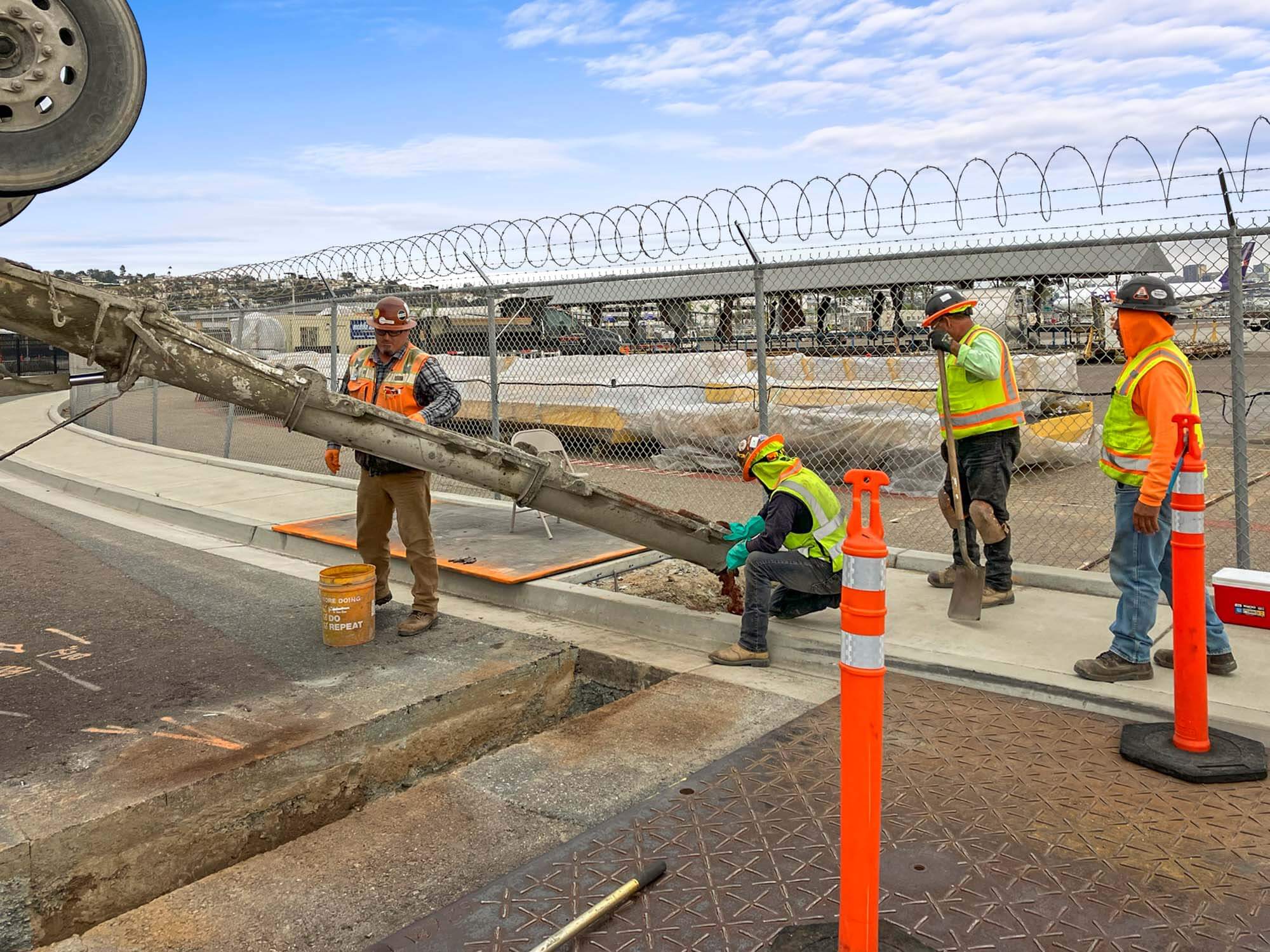
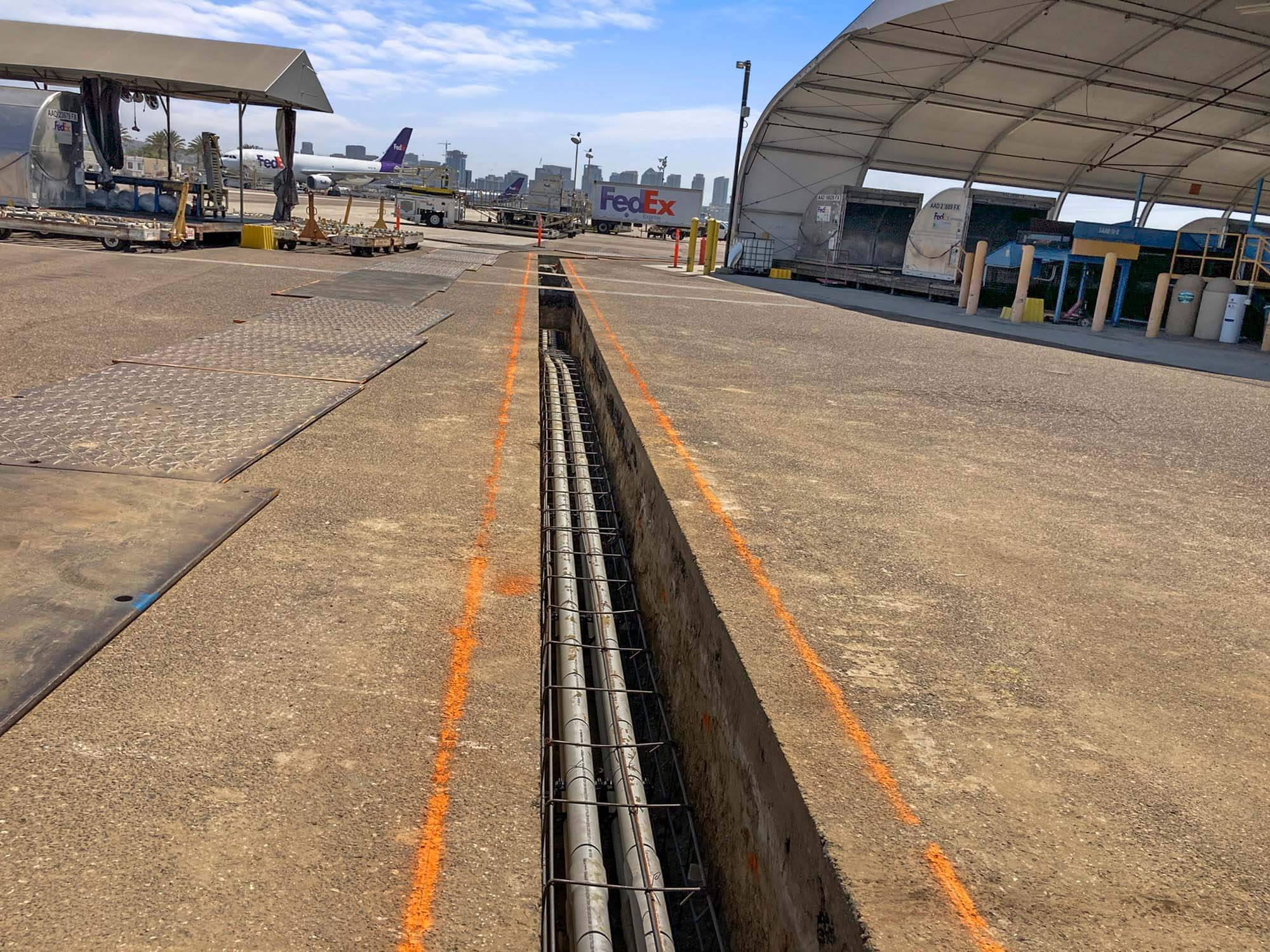
As plans progressed, the team identified that local power would not support the fully operational facility. The nearest adequate power source lay across a public street, significantly increasing the logistical challenges of the project. SilMan’s engineering team developed a comprehensive solution that minimized traffic disruptions and the progress of site work while ensuring long-term reliability.
Power Distribution Architecture
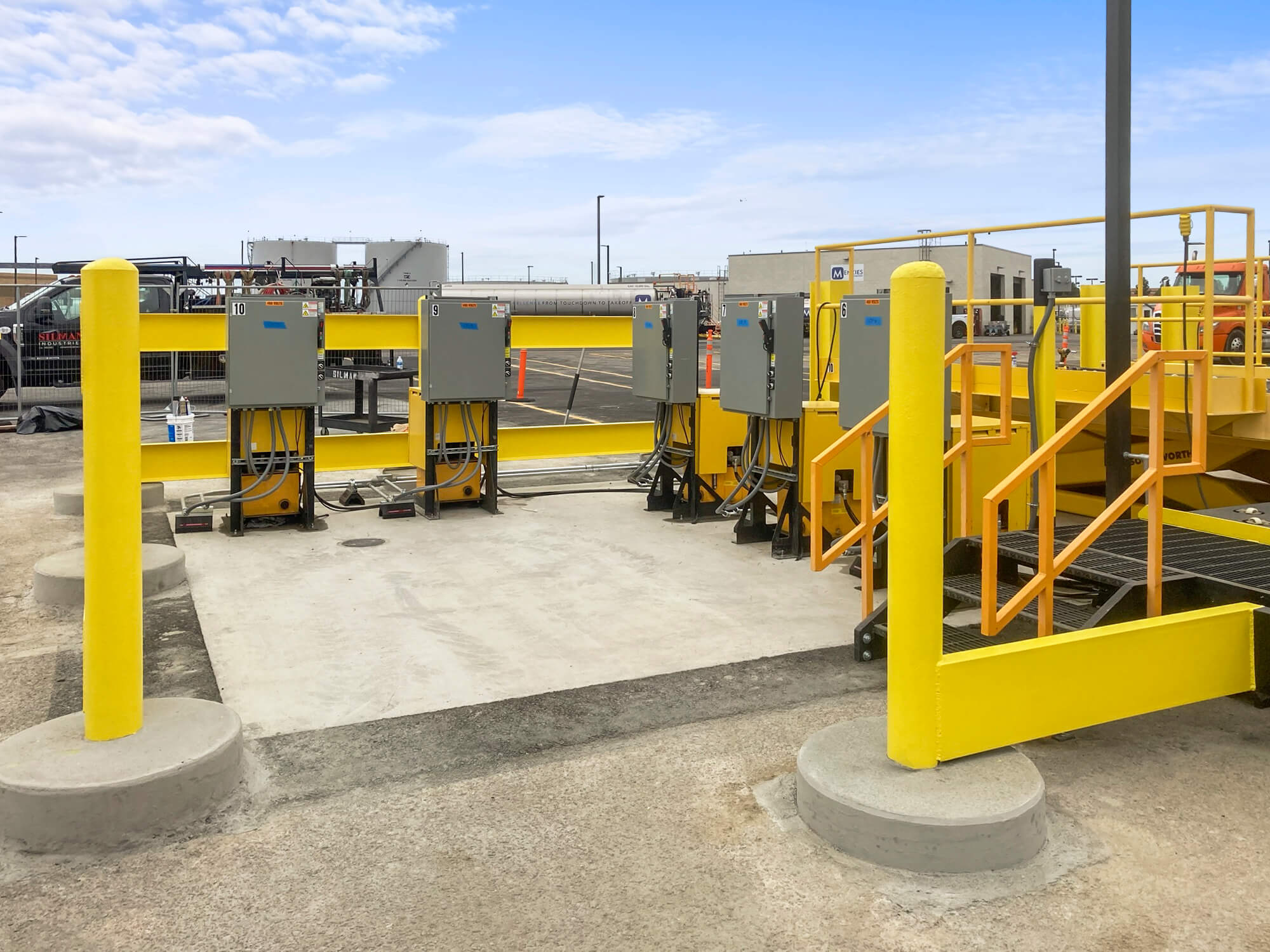
SilMan designed and installed a comprehensive electrical distribution system:
Primary Components:
- New feeder lines from the existing sort center
- Dedicated distribution panels for MHE systems
- 480V and 120V power distribution
- Integrated grounding systems meeting airport standards
Load Management:
- Calculated loads for simultaneous equipment operation
- Power factor correction for efficiency
- Surge protection for sensitive electronics
- Emergency stop circuits throughout the facility
Lighting and Utility Systems
Beyond equipment power, SilMan provided complete utility infrastructure:
Illumination Systems:
- Two LED tower lights for area coverage
- Task lighting at equipment positions
- Emergency lighting meets the code requirements
- Photocell controls for energy efficiency
Data Infrastructure:
- CAT6 cabling throughout the facility
- Dedicated raceways for future expansion
- Network connections for scale data integration
- Wireless access point infrastructure
Phase 3: Site Preparation and Civil Construction
With permits secured, SilMan mobilized for one of the project’s most critical phases: transforming an active airport location into a construction site while maintaining operational integrity.
Strategic Site Preparation
The site preparation phase demonstrated SilMan’s commitment to safety and operational excellence:
Safety and Security Planning
- Development of site-specific safety plans tailored to airport operations
- Creation of construction site security protocols meeting federal requirements
- Implementation of a comprehensive Site-Wide Pollution Prevention Plan (SWPPP)
- Installation of barriers and identification systems for construction zones
Underground Utility Investigation. Before any excavation, SilMan’s team conducted thorough subsurface investigations:
- USA ticket coordination for utility marking
- Advanced scanning for unknown utilities
- Mapping of existing infrastructure to prevent conflicts
- Development of protection strategies for in-place systems
Civil Infrastructure Development
The civil construction phase showcased SilMan’s self-performance capabilities across multiple disciplines:
Excavation and Earthwork
- Removal and off-haul of existing hard surfaces
- Excavation to 21 inches below finished grade
- Installation of 17 inches of virgin ¾-inch base rock
- Achievement of 95% modified Proctor compaction throughout
Concrete Slab Construction
The centerpiece of the civil work involved constructing a robust concrete platform capable of supporting heavy cargo operations:
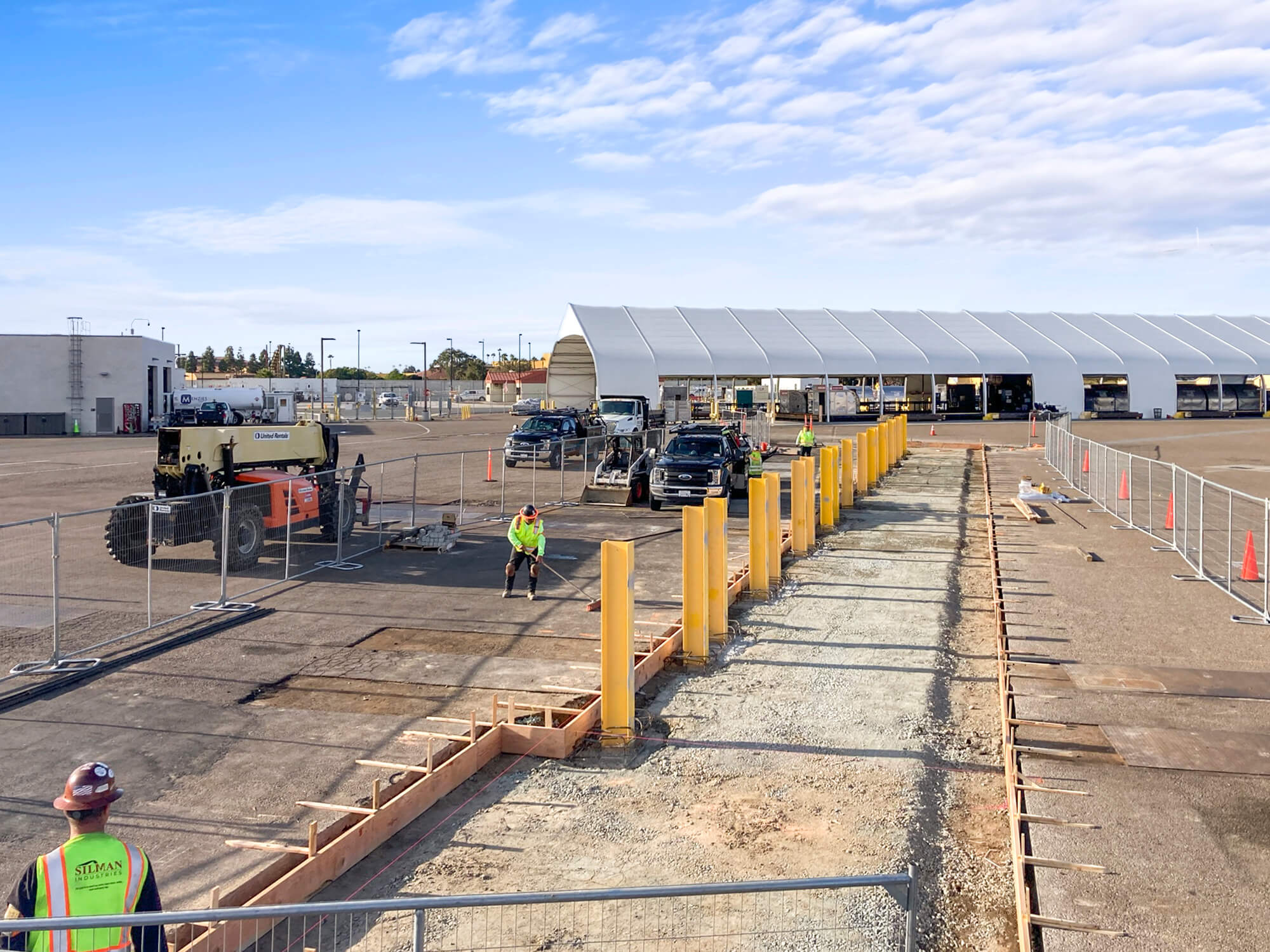
- 180 feet by 15 feet reinforced concrete slab
- 4,000 PSI concrete mix for maximum durability
- Sophisticated reinforcement design for dynamic loads
- Precision finishing to ensure proper drainage and equipment mounting
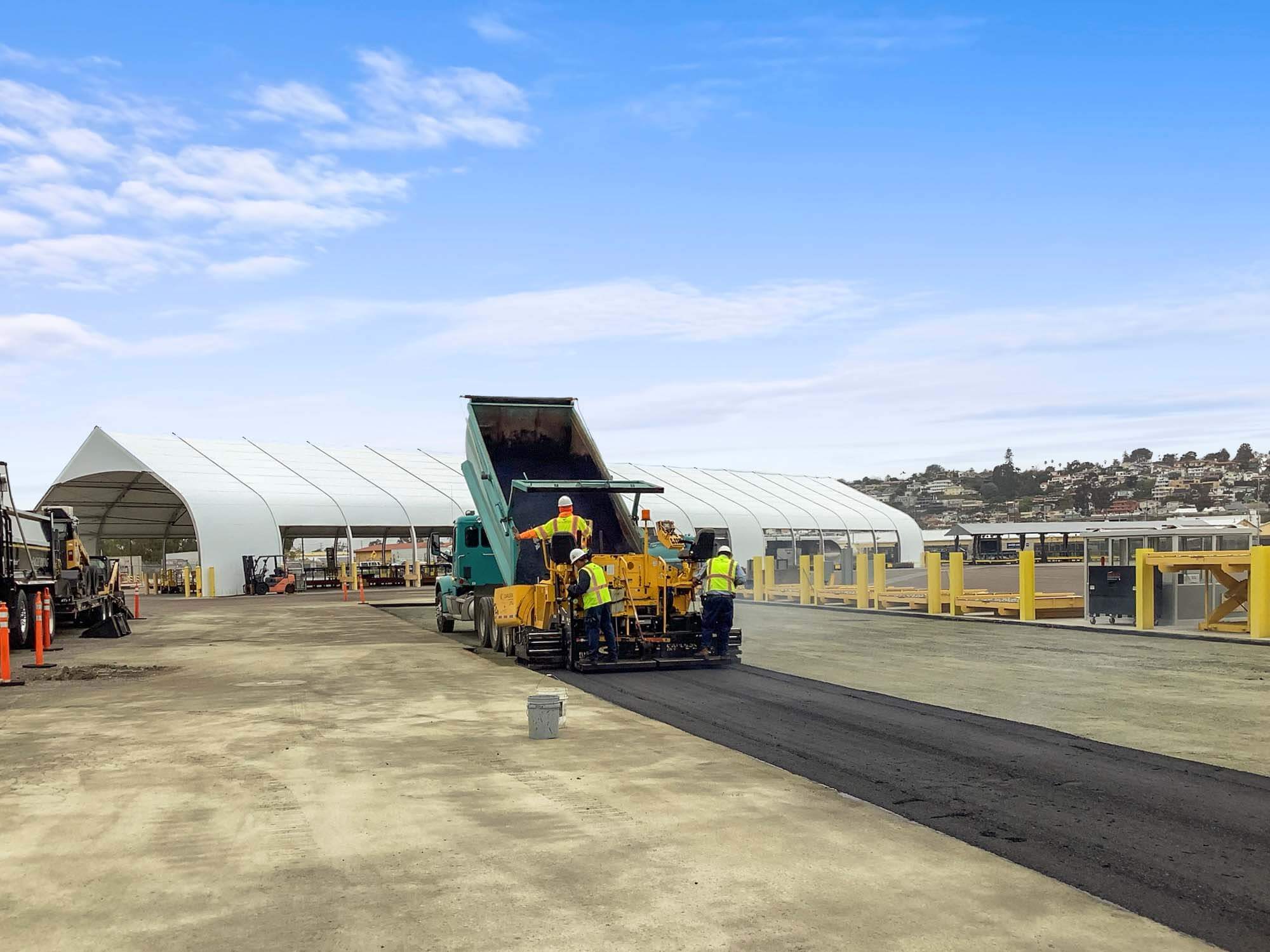
Asphalt Restoration Following underground utility work, SilMan restored all affected surfaces:
- Replacement of asphalt within 18 inches of construction areas
- FAA-specification asphalt mix for airside applications
- Integration with existing pavement for seamless transitions
Phase 4: ULD Handling Equipment Installation
The heart of the transfer terminal lies in its sophisticated material handling systems. SilMan’s expertise in equipment integration ensured optimal performance from day one.
Scissor Lift Systems
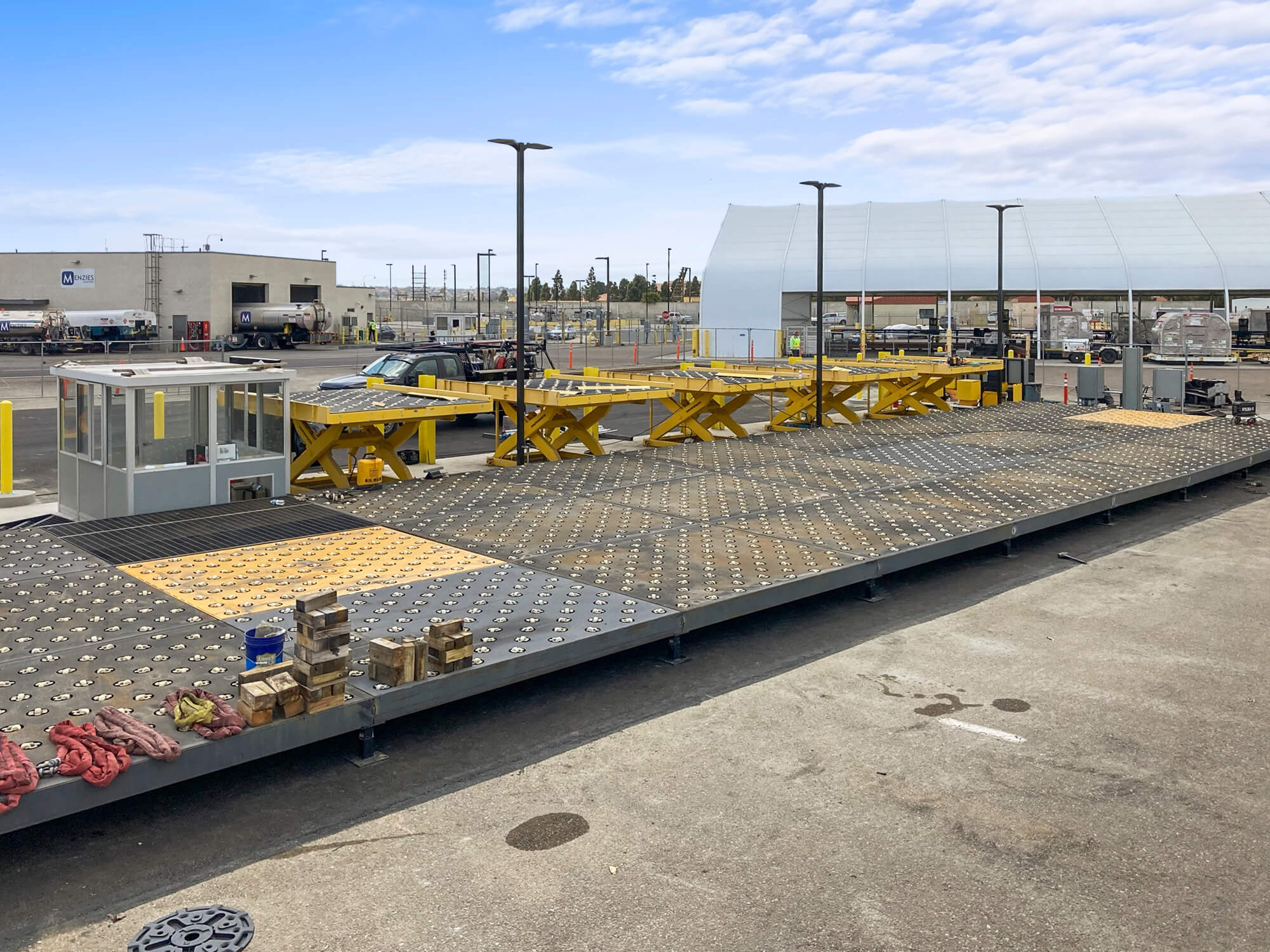
Ten Southworth Air Cargo Lift units (Model AGFS15-49) formed the backbone of vertical cargo movement:
Technical Specifications:
- Platform dimensions: 120″ x 156″ (10′ x 13′)
- Specialized air cargo design for aviation containers
- Integrated floating bumpers for equipment protection
- Hydraulic power units with redundant safety systems
Installation Excellence:
- On-site OEM support during critical installation phases
- Precision alignment with caster deck systems
- Integration with facility power and control systems
- Comprehensive testing and commissioning protocols
Caster Deck Infrastructure
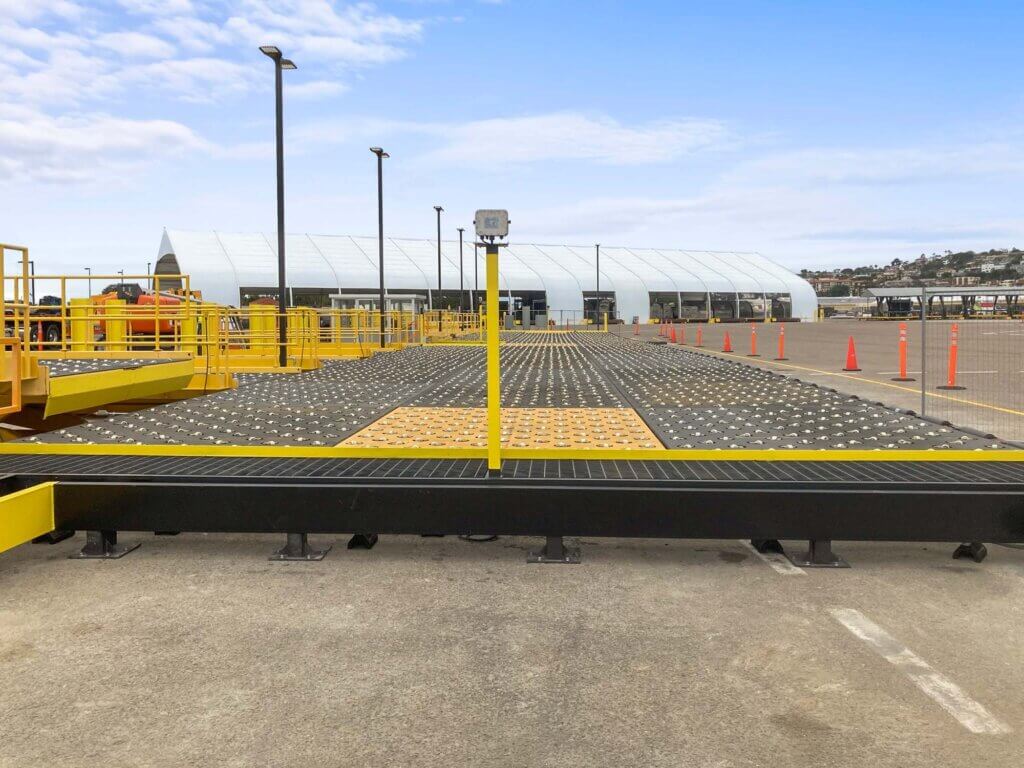
Forty-one Talos Engineered Products caster decks created a flexible cargo staging system:
System Components:
- Individual deck dimensions: 108″ x 132″ (9′ x 11′)
- 164 heavy-duty caster deck supports
- Integrated skirt systems for safety and aesthetics
- Design per FedEx Drawing No. OM7J0002 specifications
Operational Features:
- 360-degree cargo mobility
- Quick reconfiguration for varying container sizes
- Durable construction for 24/7 operations
- Minimal maintenance requirements
Precision Scale Integration
Three Avery Weigh-Tronix scales provided critical weight verification capabilities:
Technical Details:
- Model: AWT05-500926 Single Caster Scale
- Capacity: 20,000 pounds
- Dimensions: 131″ x 107″ platforms
- ZM303 indicators with remote mounting capability
Calibration and Certification:
- On-site OEM technician calibration
- Legal-for-trade certification
- Integration with facility data systems
- Redundant measurement verification
Safety and Access Infrastructure
Comprehensive safety systems ensured worker protection and operational efficiency:
Fixed Infrastructure:
- Three engineered fixed platforms with OSHA-compliant railings
- Three sets of industrial stairs meeting airport specifications
- Twelve embedded bollards for equipment protection
- 180 feet of fixed deck bumpers with integrated rollers
Protective Systems:
- 50 feet of C12 bumper systems at critical points
- Container stops at 60 strategic locations
- Complete perimeter guarding
- Emergency egress pathways
Lessons Learned: Building on Success
The San Diego Air Cargo Transfer Terminal project reinforced several critical insights for complex airport infrastructure projects:
Flexibility in Execution
The primary power change order demonstrated that successful projects require:
- Robust contingency planning
- Strong stakeholder relationships
- Technical depth to develop alternatives
- Project management skills to maintain momentum
Integration Complexity
Airport projects demand exceptional coordination:
- Early engagement with all stakeholders
- Comprehensive underground utility investigation
- Flexible scheduling for operational requirements
- Clear communication protocols
Value of Self-Performance
SilMan’s integrated delivery model proved essential:
- Single-source accountability for results
- Rapid response to changing conditions
- Consistent quality across disciplines
- Efficient problem resolution
Setting the Standard for Airport Infrastructure Excellence
The ULD handling facility provided in San Diego stands as a testament to what’s possible when engineering excellence meets operational expertise. In an environment where precision, safety, and reliability converge at the speed of global commerce, SilMan Industries demonstrated why leading logistics providers trust them with their most critical infrastructure investments.
This project showcased every element of SilMan’s integrated capabilities:
- Engineering Excellence: From initial design through as-built documentation
- Construction Expertise: Self-performed work, ensuring quality and schedule
- Technical Depth: Solving complex challenges like the primary power installation
- Project Management: Coordinating multiple stakeholders in a demanding environment
- Operational Understanding: Delivering solutions that enhance daily operations
For organizations facing complex infrastructure challenges—whether in airports, distribution centers, or industrial facilities—the San Diego air cargo truck deck project illustrates the SilMan difference.
As global logistics continues to evolve, facilities like the San Diego Air Cargo Transfer Terminal become increasingly critical to supply chain efficiency. SilMan Industries remains committed to delivering these transformative projects, combining technical excellence with practical expertise to build the infrastructure that keeps global commerce moving.
Through integrated delivery, proven expertise, and unwavering commitment to client success, SilMan Industries continues to set the standard for industrial infrastructure excellence—one successful project at a time.
About the Company
SilMan Industries (previously SilMan Construction) is based in San Leandro, Calif., with Engineering and Field Operations offices in Tupelo, Miss. The firm provides integrated turnkey solutions in the Industrial, Manufacturing, Distribution, and Public Works sectors.
Notably, in 2010 SilMan Industries was contracted to dismantle and remove the NUMMI assembly line in Fremont, Calif., transport the equipment, and reinstall the system in Blue Spring, Miss., establishing Toyota Motor Manufacturing Mississippi (TMMMS). This high-visibility project ignited the company’s meteoric growth, laying the foundation for SilMan’s national service area.
For more information, please visit www.silmanindustries.com/about.
Optimize Your Investment
SilMan’s multi-disciplinary Specialty Trade Services (STS) is a community of project professionals: Engineers, Project Managers & Coordinators, Trade Teams, and Safety Management. Bringing a new performance standard throughout the industrial community:
STS commonly supports the SilMan System Integration group. Specializations include distribution center optimization for the Fulfillment and Parcel sectors (see “A Comprehensive Guide to Efficient Parcel Handling Systems”), food and beverage manufacturing and warehouse solutions, and end-to-end innovative manufacturing solutions.
Check out SilMan’s “One Team” approach in action: Facility improvements and a new bottling line at a leading West Coast dairy.
Frequently Asked Questions for Air Cargo Transfer Depot
How does an air cargo transfer terminal manage ULDs between trucks and the airside?
A modern air cargo transfer terminal uses a system of truck decks, heavy-duty scissor lifts, and a caster deck infrastructure. This equipment allows Unit Load Devices (ULDs) to be quickly transferred, weighed, and staged with 360-degree mobility for seamless integration with air operations.
What specialized equipment is essential for a ULD truck deck facility?
Essential equipment includes heavy-duty scissor lifts (like the 10 Southworth Air Cargo Lift units with hydraulic power units installed in the case study) for vertical movement, caster decks for cargo staging and mobility, and precision integrated scales to verify container weights, all supported by a robust electrical distribution system.
What is the biggest challenge when building a new facility inside an active airport environment (Airside)?
The primary challenge is maintaining operational continuity (zero disruption to cargo flow) while navigating complex security and safety protocols (e.g., SANR designation), multi-tiered permitting processes, and coordinating with multiple airport authority stakeholders.
