
Concrete to Conveyor: A 90-Day Turnkey Distribution Center
CLIENT
Leading Parcel Carrier
INDUSTRY
Parcel
PROJECT SCOPE
Engineering, Civil Construction, Millwright/Mechanical & Electrical (Primary Power, Panels, Controls), Project Management
Article Summary: From Parking Lot to Parcel Hub
In the fast-paced world of logistics and distribution, time is currency. When a leading parcel carrier approached SilMan Industries with an ambitious challenge—transform a parking lot into a fully operational distribution center in just 90 days—it represented more than a construction project. It was an opportunity to demonstrate how a diverse team of system integrators, engineers, project managers, project coordinators, and SilMan’s Specialty Trade Services, can deliver extraordinary results under extraordinary pressure.
The project would ultimately showcase every facet of SilMan’s capabilities, from civil engineering and infrastructure development to the installation of material handling equipment (MHE) and electrical integration. More importantly, it would prove that the company’s founding vision of uniting diverse technical disciplines under one coordinated effort could create value that exceeds the sum of its parts.
The Concrete-to-Conveyor Challenge: Speed, Complexity, and Coordination
Converting an existing parking area into a modern parcel distribution facility presents unique challenges even under normal timelines. The 90-day constraint elevated these challenges exponentially. The project required:
- Complete site transformation, including demolition, excavation, and new foundation work
- Installation of comprehensive utility infrastructure
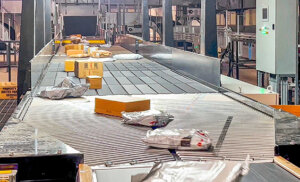
- Installation of 19 conveyor systems
- Full electrical and control system integration
- Coordination with a third-party contractor constructing the building envelope
- Zero tolerance for delays that could impact the client’s operational continuity
Adding to the complexity, SilMan received notification of a critical drawing change just two days before excavation was scheduled to begin—a scenario that could have derailed less experienced teams.
Speak to a key team member on this project

Meet Jeff Piazza.
For more information about this project or related topics, contact Jeff by email or call directly at 925.984.0062.
You may also enjoy this article
Phase 1: Fast-Track Civil Construction & Site Transformation
Rapid Response and Adaptation
The civil team, led by Rafael Cornejo, exemplified the agility that would characterize the entire project. When surveyors confirmed that dimensional adjustments were needed due to the last-minute drawing changes, the team pivoted immediately. Through a series of strategic 12-hour workdays, they absorbed the schedule impact without delaying subsequent phases.
“It was clear to the team that the client realized the depth of the package that SilMan Industries brings to the project,” Rafael reflected. His observation proved prescient—even the site manager from US Modular, the third-party contractor, noted he’d “never seen anything like it” in terms of the team’s attention to detail and systematic verification processes.
Foundation Excellence Under Pressure
The scope of civil work was substantial:
- Demolition and site clearing: Complete removal of existing hard surfaces and off-haul of materials
- Precision grading: Excavation and grading of native soils to achieve specified grades of 2% or less
- Substrate preparation: Supply and placement of ¾” crushed gravel at 3″ rise per the plans
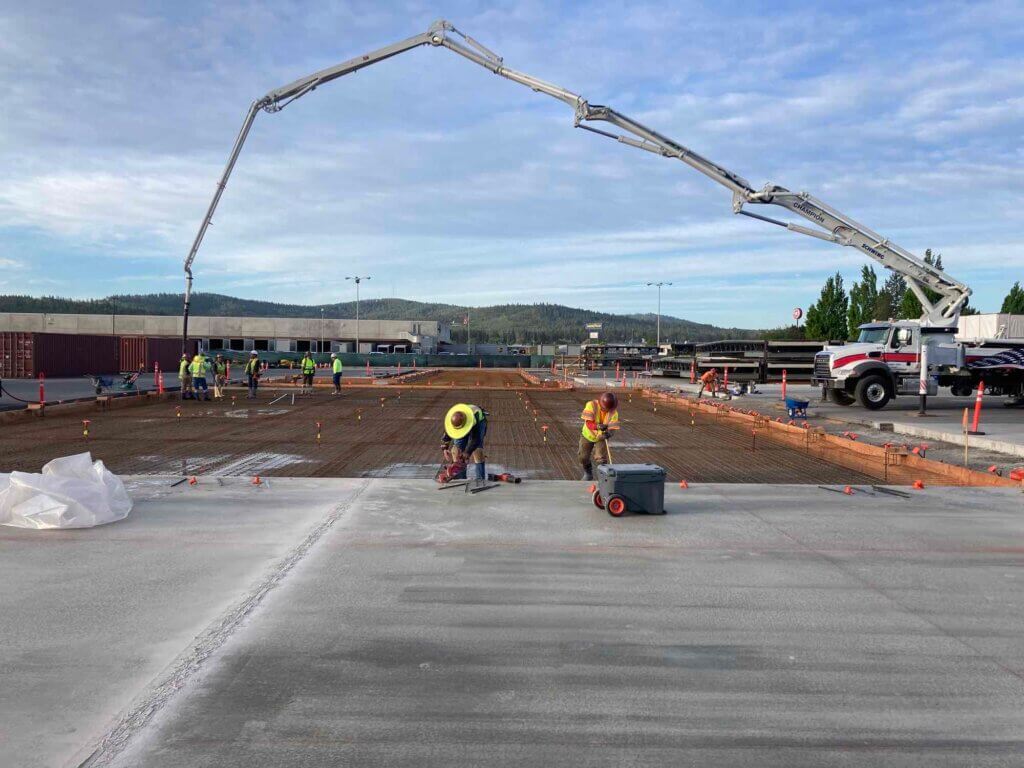
- Concrete infrastructure: Installation of welded wire fabric (WWF), steel embeds, and formwork
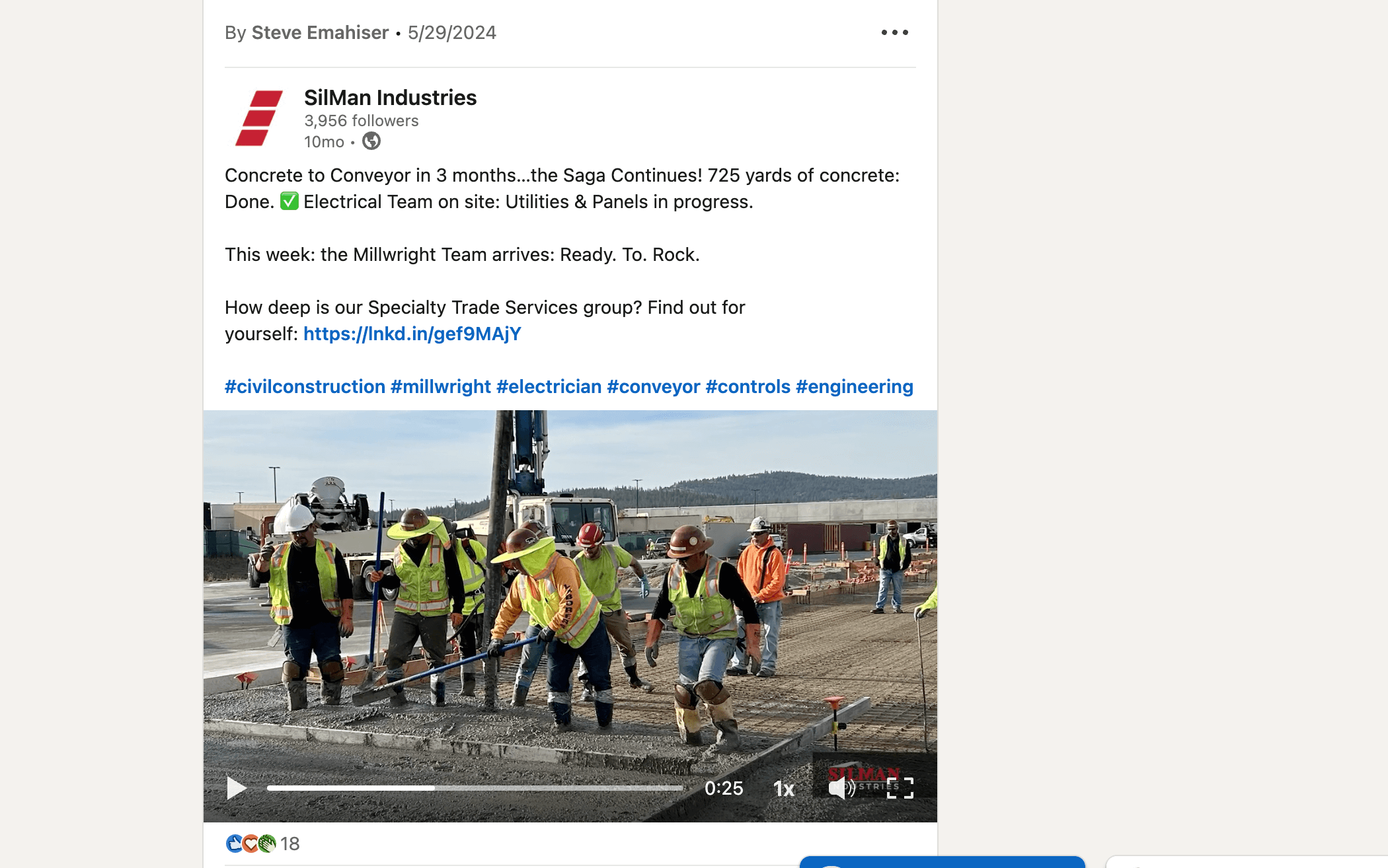
- Massive concrete placement: 725 cubic yards of 4,000 PSI concrete delivered across 80 truckloads
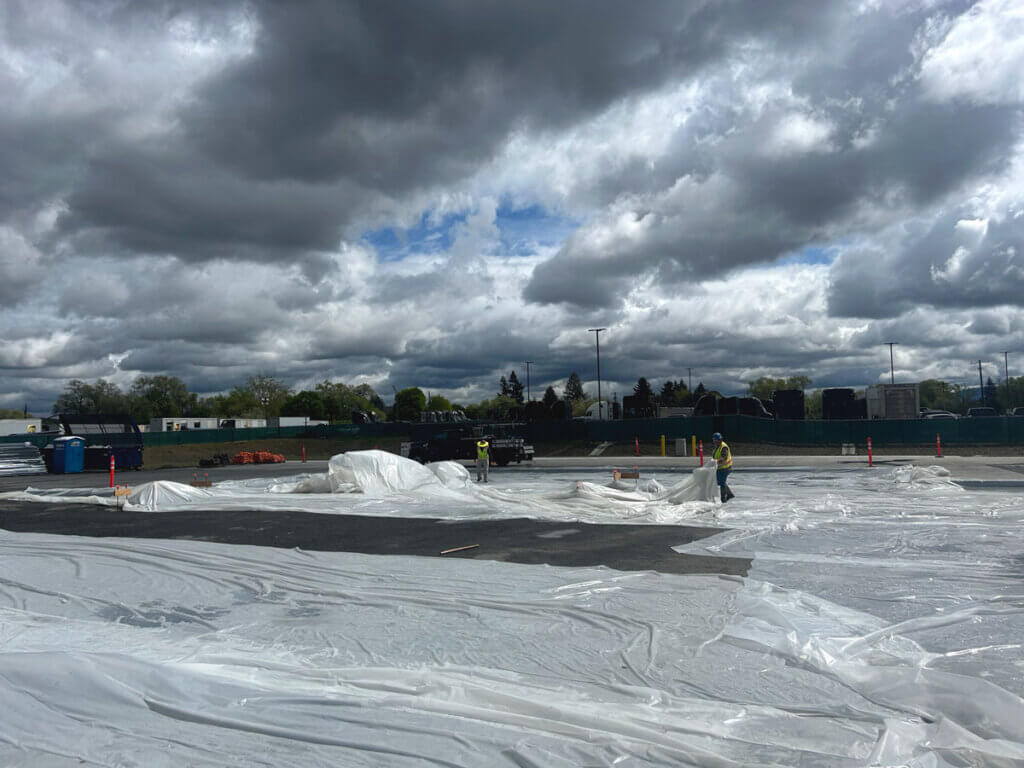
The team’s execution was remarkable. During peak operations, they placed 185 cubic yards of concrete per day for three consecutive days—a feat that required precise coordination among batch plants, trucking logistics, and field crews. When unexpected rainstorms threatened recently poured sections, the team deployed large plastic sheeting systems to protect the curing concrete, demonstrating the proactive problem-solving that kept the project on track.
Infrastructure Integration
Beyond the visible foundation work, the civil team excavated and installed three critical utility trenches, each up to 200 feet long and 3 feet deep. This infrastructure would support:
- Electrical feeders for 800A distribution panels
- 4″ PVC Schedule 40 water supply lines
- 4″ SDR35 sewer connections
The precision required for these installations—ensuring proper depths, slopes, and connections while maintaining the aggressive schedule—showcases the team’s technical expertise and field coordination.
A 90-day Performance in Real-Time
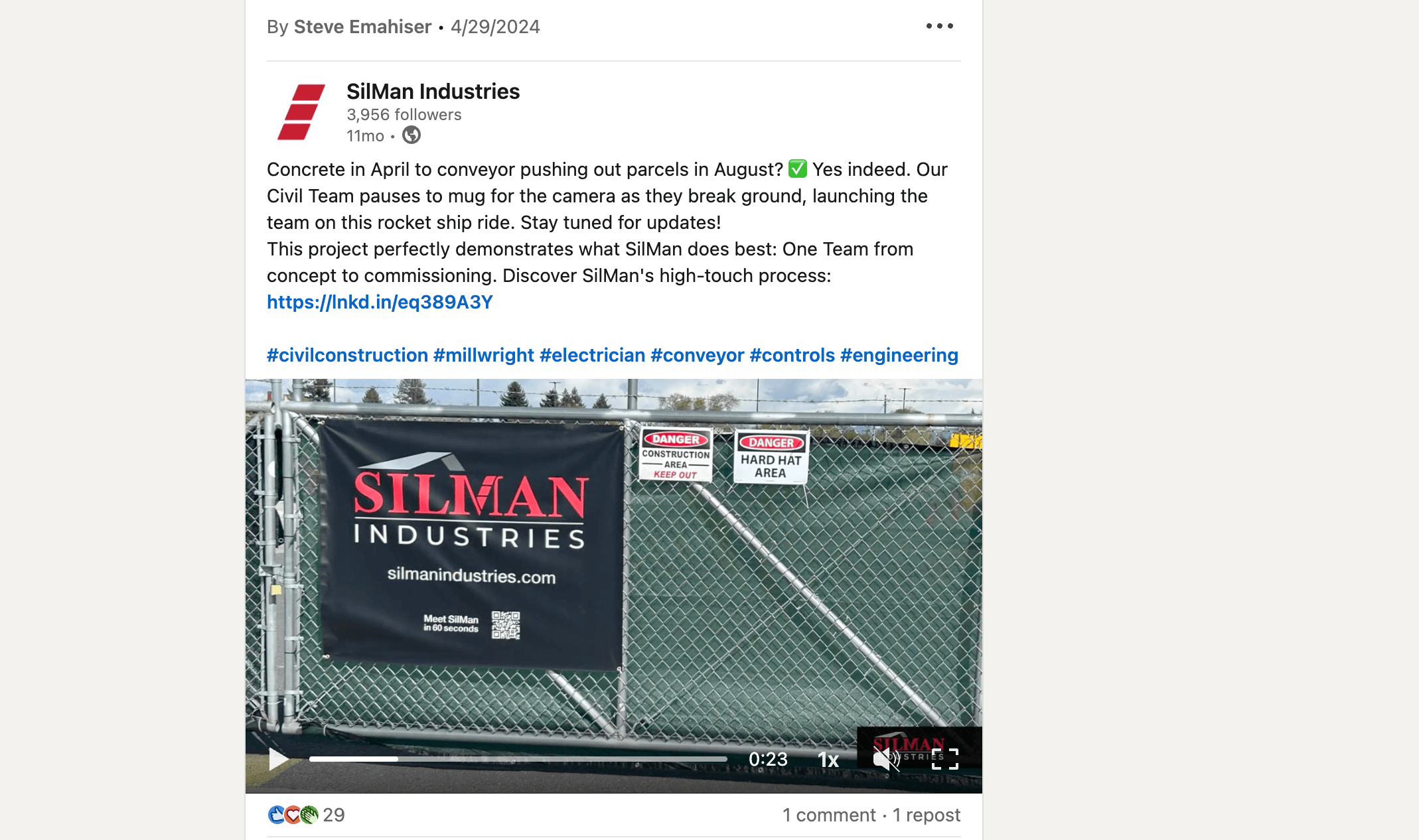
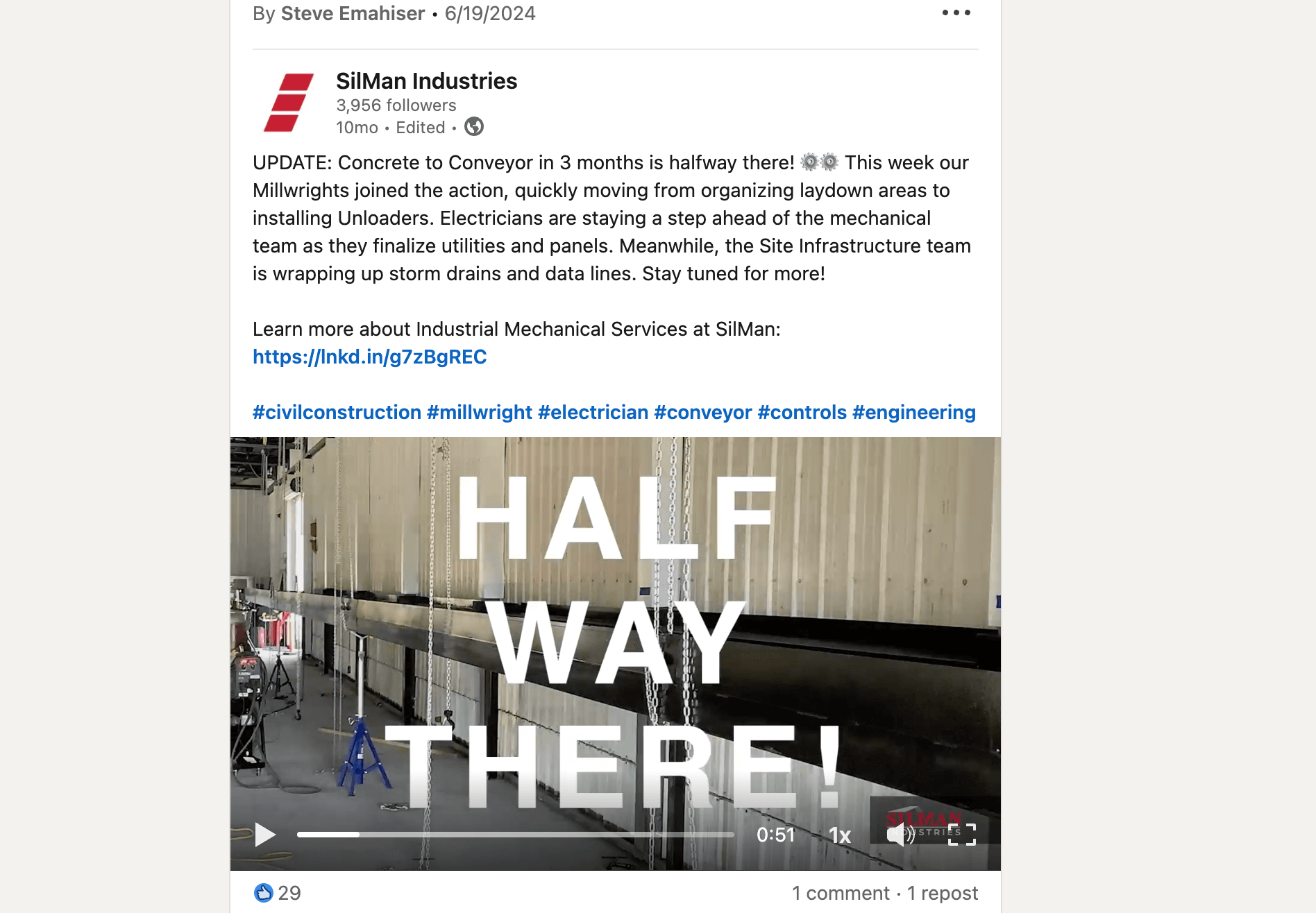
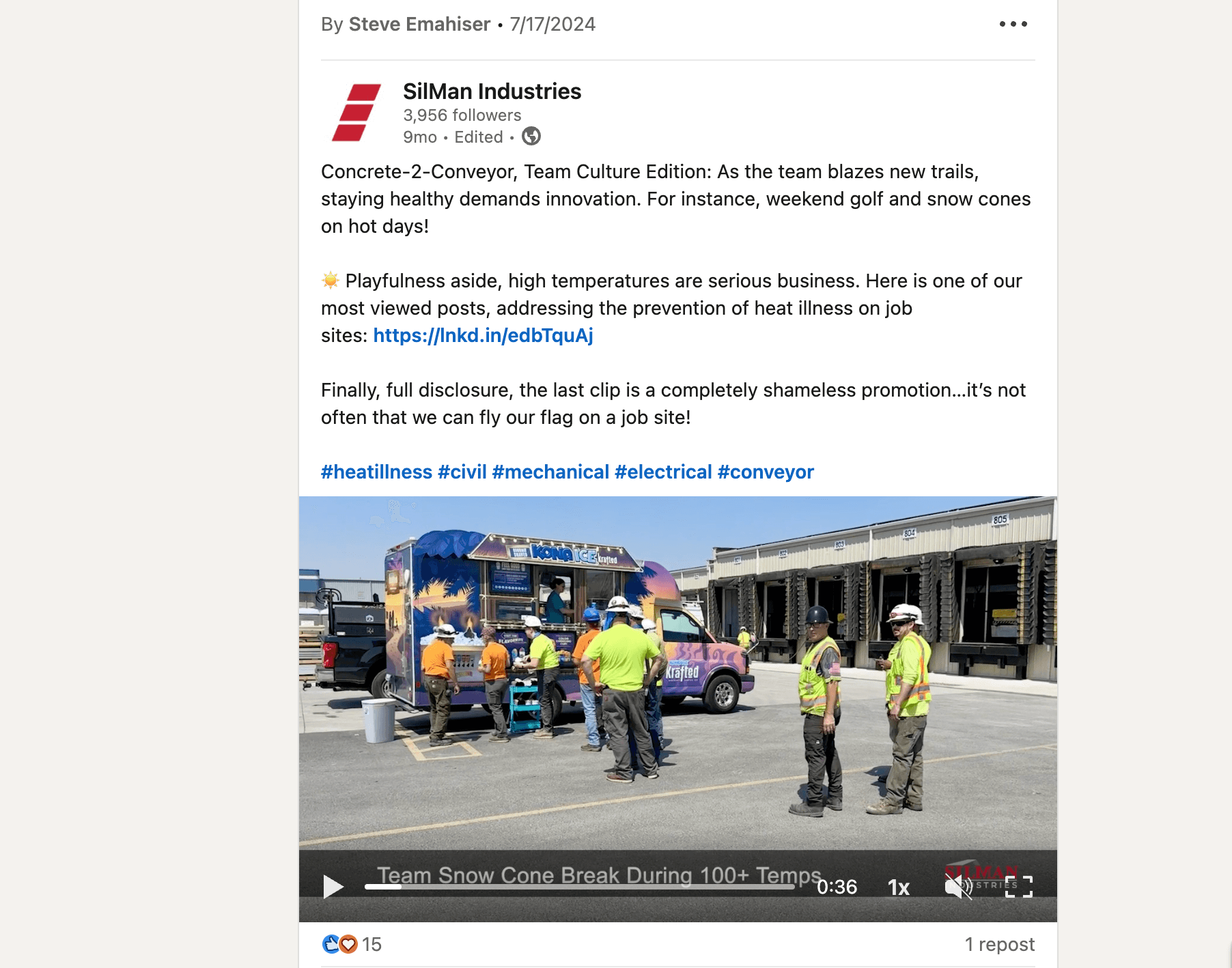
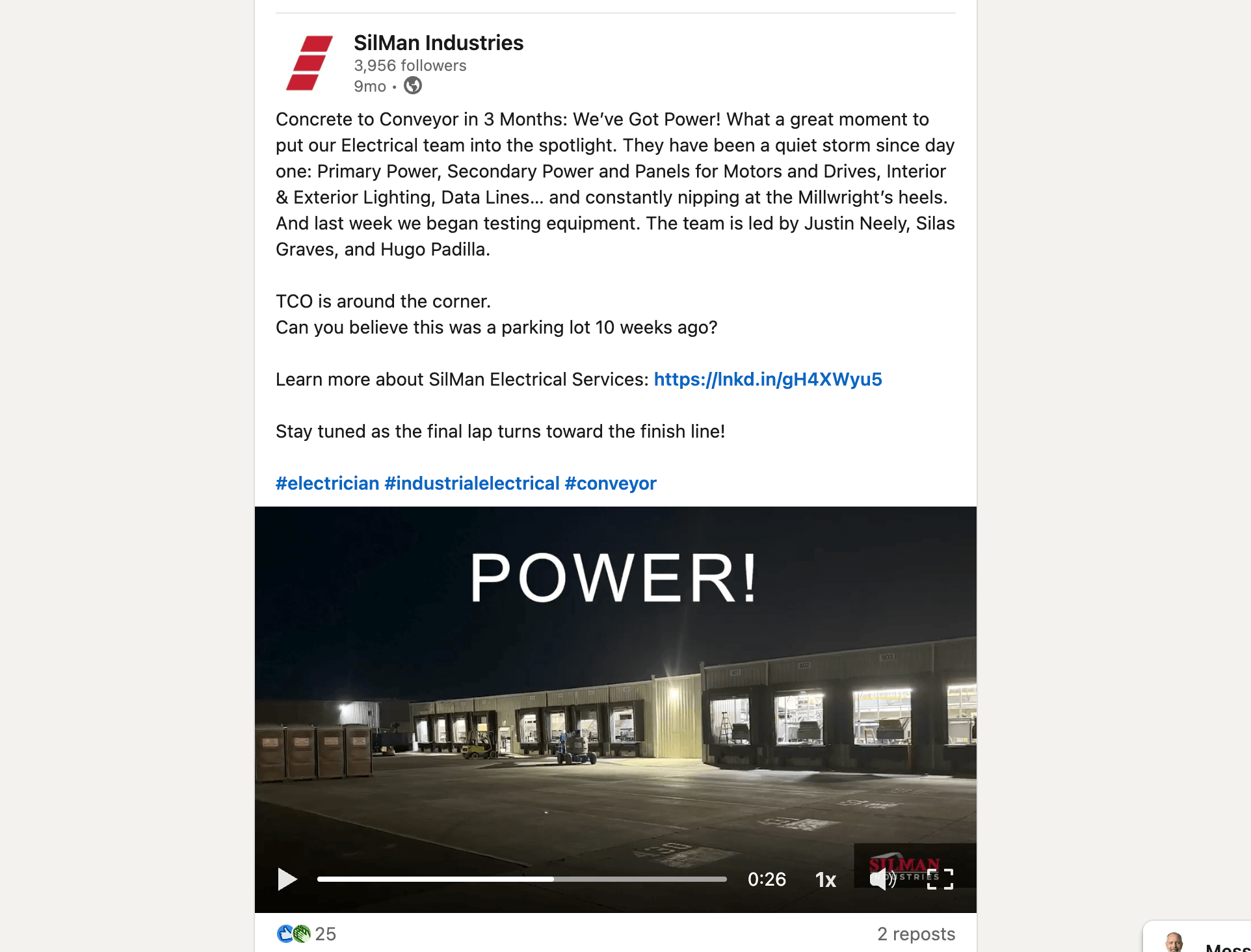
LinkedIn posts published throughout the project. Click images for fullscreen viewing.
Phase 2: Project Management and Coordination Excellence
Digital-First Project Control
Under the leadership of Farley Young, the project leveraged Procore’s comprehensive capabilities to maintain visibility and control across all disciplines. This digital infrastructure proved crucial for coordinating multiple teams working simultaneously.
The Procore implementation encompassed:
- Real-time documentation: Daily logs, photo documentation, and observation tracking
- Quality control: Structured inspection protocols and punch list management
- Financial management: Budget monitoring, change order control, and commitment tracking
- Communication hub: RFIs, submittals, and transmittals centralized for all stakeholders
The leadership team reported “very positive interactions with customer’s team and their representatives.” This collaborative atmosphere extended throughout the project hierarchy, creating an environment where challenges were addressed proactively rather than reactively.
Engineering Support and Pre-Construction Planning
The success visible in the field was underpinned by intensive engineering efforts led by Justin Green in SilMan’s Tupelo office. When the parcel carrier initially approached SilMan for mechanical installation pricing with a three-day turnaround, Green’s team not only met the deadline but identified opportunities to deploy the unique capabilities of the SilMan civil team—a strategic insight that expanded the project scope and value proposition.
The engineering team, including Harrison Rupp and Sean Johnson, provided continuous support through:
- Mechanical installation drawings
- Shop drawings for platforms and supports
- Equipment procurement and logistics coordination
- Technical specifications for field implementation
- Permits
This seamless integration between office-based engineering and field operations exemplified SilMan’s “One Team” philosophy in action.
Phase 3: MHE & Conveyor System Installation
Mechanical Systems Installation
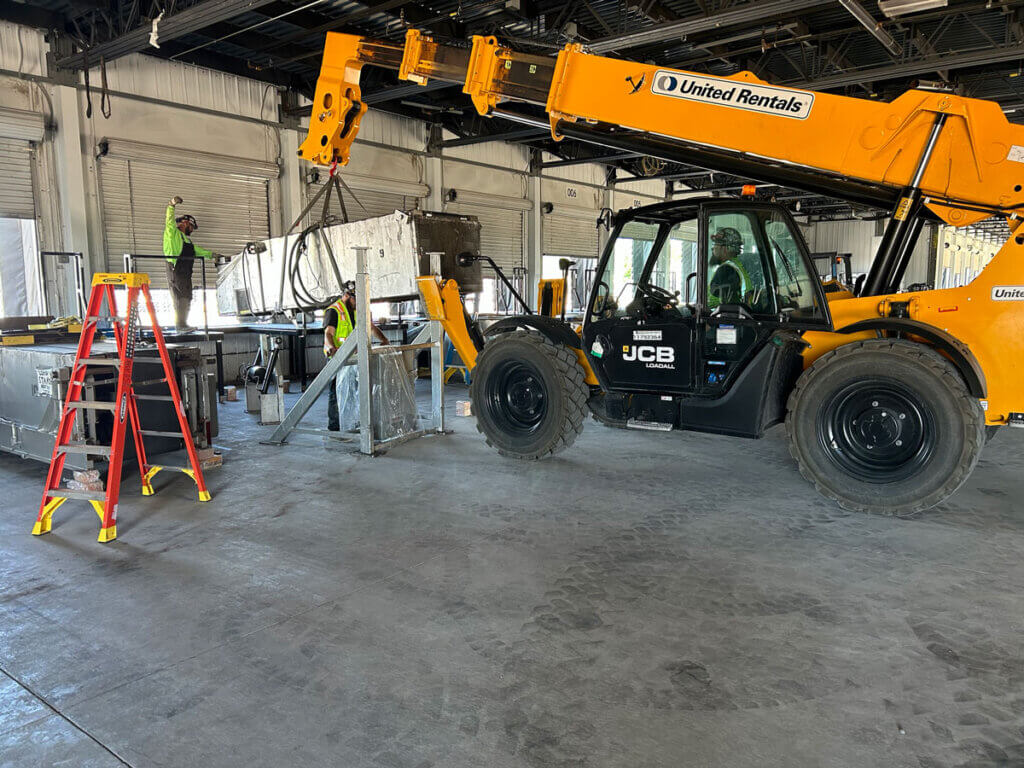
The mechanical phase, beginning during Memorial Day week, represented a masterclass in industrial rigging and installation. Mechanical Foreman Scott Cully dispatched Brad Rogers and Richard Eichhorn to lead the Millwright team, both veterans of SilMan’s recent success installing over seven-miles of conveyor for an East Coast regional distribution hub, ensuring experienced leadership for this critical phase.
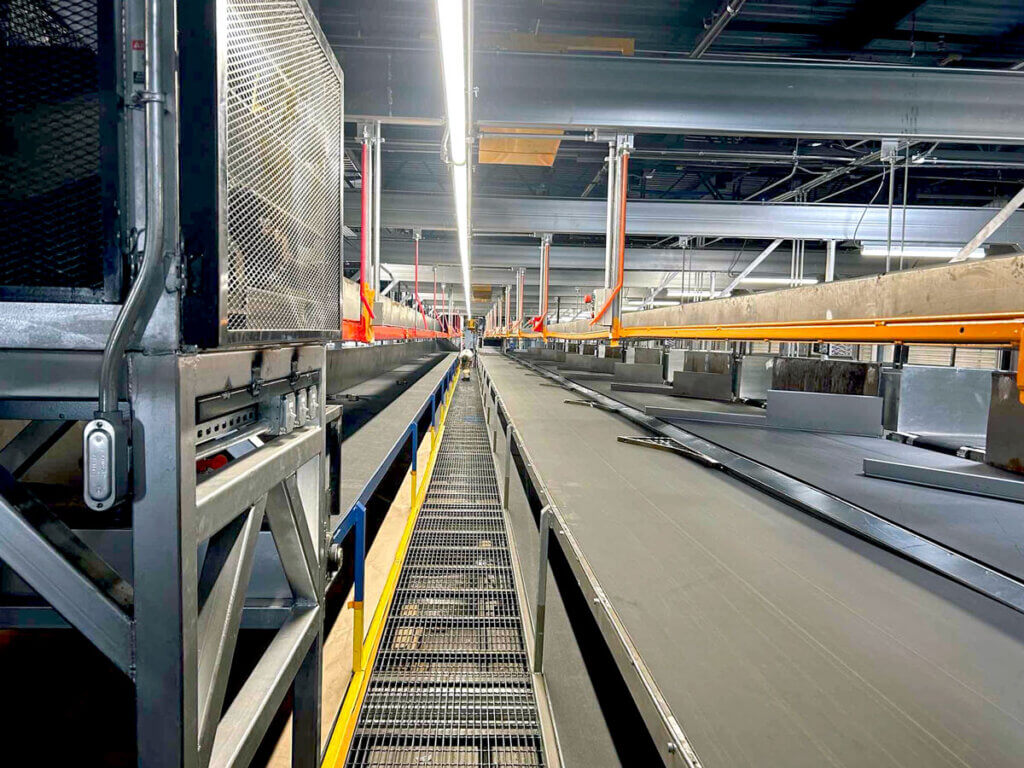
The MHE scope encompassed:
- Equipment inventory and control: Systematic cataloging of components relocated from Harrisburg
- Procurement coordination: Sourcing of beds, supports, pans, horizontal rollers, and guard assemblies for 19 conveyor systems
- Strategic partnerships: Collaboration with Talos Engineered Products for welded bulk components
- Installation execution: Precise mechanical assembly following the replicated Harrisburg configuration
The millwright team’s expertise shone through in their ability to maintain dimensional tolerances and alignment specifications across the extensive conveyor network, ensuring smooth material flow and operational reliability.
Electrical Integration and Control Systems
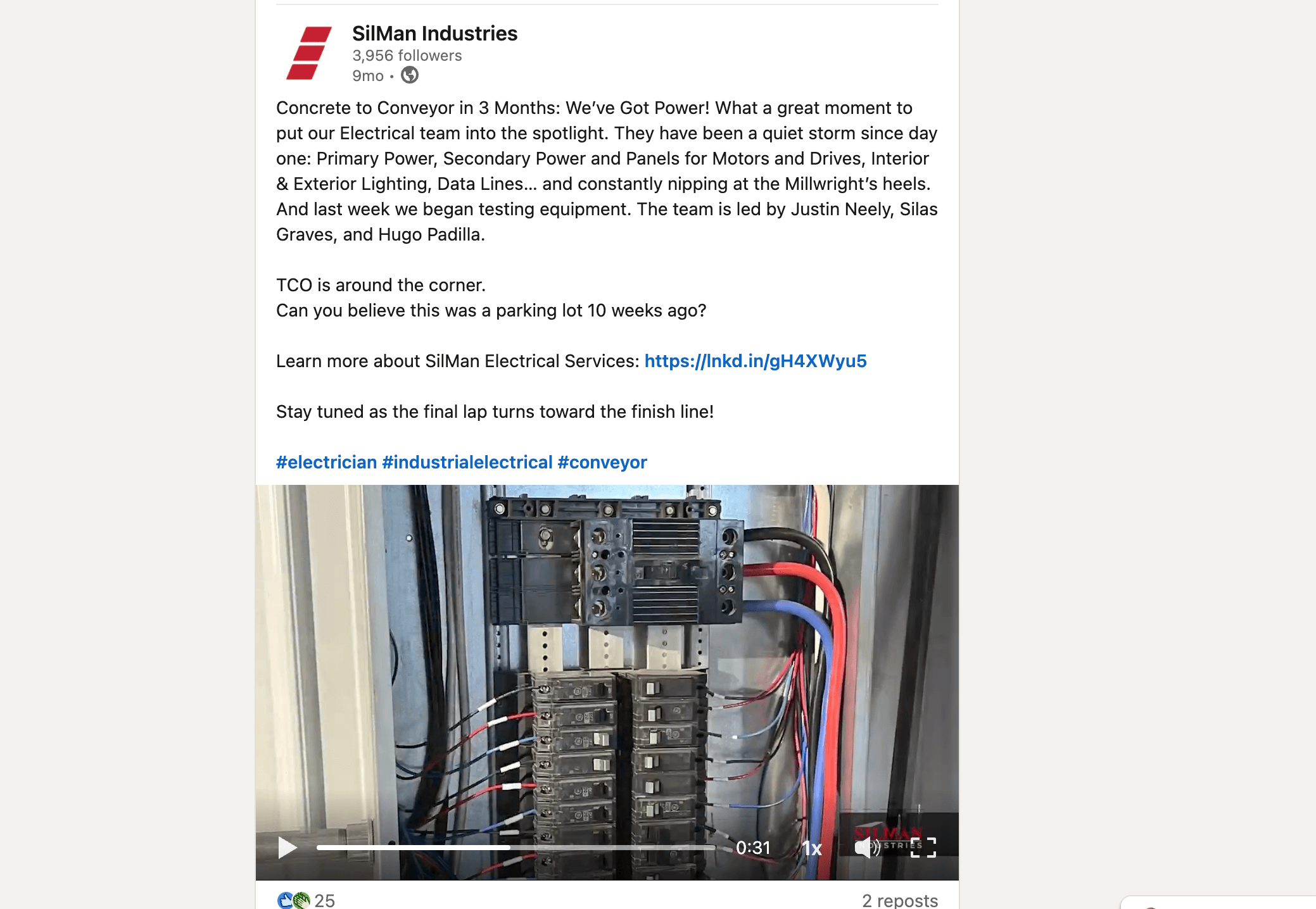
Following closely behind—and overhead—of the millwrights, the electrical team tackled the complex task of bringing the mechanical systems to life. The electrical scope demonstrated sophisticated industrial installation capabilities:
- Power distribution: Installation of triple parallel XHHW MCM500 aluminum conductor feeders within 4″ PVC raceways
- Megger testing: Comprehensive insulation resistance testing prior to terminations
- Code compliance: EMT conduit with compression fittings above 8 feet, rigid galvanized conduit below
- Lighting infrastructure: Installation of 45 industrial LED fixtures (18 L9A, 21 L10, and 6 L12 models)
- Convenience power: Strategic placement of 120V duplex receptacles throughout the facility
The integration of control panels, motor starters, and safety systems required precise coordination with client-provided components, demonstrating SilMan’s ability to work seamlessly within client specifications while maintaining schedule integrity.
Cultural Excellence: The Human Factor
Beyond technical execution, the undertaking showcased SilMan’s distinctive culture. The civil team’s approach to maintaining morale during intensive work periods—renting two Airbnb residences and alternating dinner preparation duties—created a sense of community that translated into exceptional field performance. This “community” approach, as noted in internal communications, fostered the resilience needed to maintain quality and efficiency during the project.
Electrician Hugo Padilla’s cross-functional support, managing his own team while keeping “an eye on the civil team” during Rafael’s brief absences, exemplified the collaborative spirit that defines SilMan’s operations. This wasn’t mandated by organizational charts—it was simply how SilMan teams operate.
Strategic Implications: The “One Team” Advantage
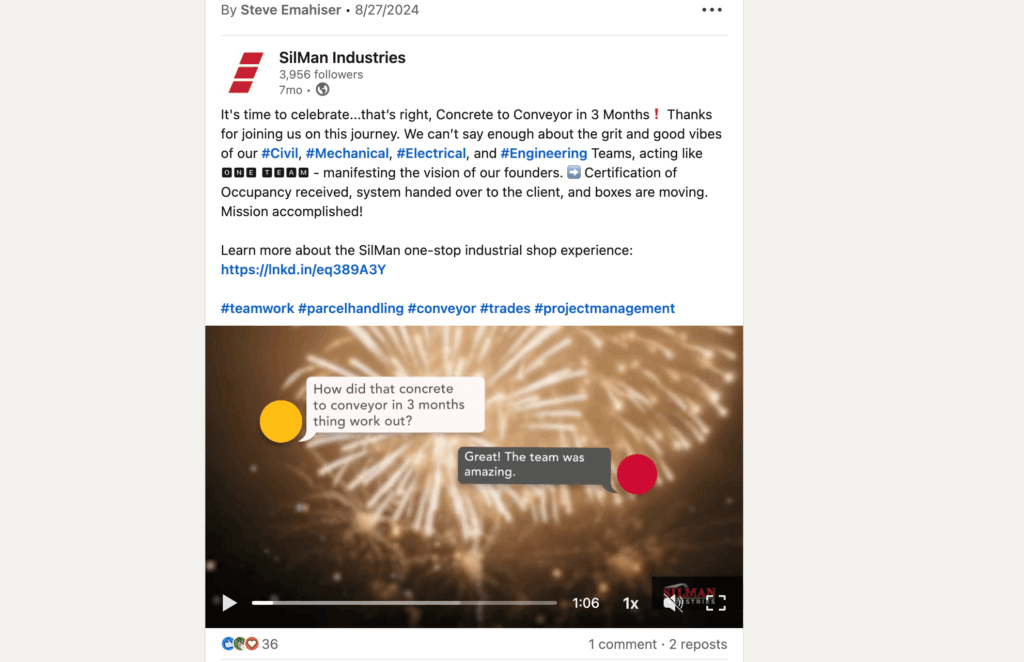
This endeavor crystallizes several strategic advantages of SilMan’s integrated service model:
- Accelerated Timeline Execution: By controlling civil, mechanical, and electrical disciplines internally, SilMan eliminated traditional coordination delays and contractor interfaces that often extend project schedules.
- Single-Point Accountability: The carrier worked with one partner for multiple scopes, simplifying communication, reducing administrative burden, and ensuring consistent quality standards.
- Adaptive Problem-Solving: When drawing changes emerged or weather threatened progress, SilMan’s teams adapted without finger-pointing or change order disputes common in multi-contractor environments.
- Knowledge Transfer: Lessons learned in civil operations immediately informed mechanical and electrical phases, creating a continuous improvement cycle within the project timeline.
- Cultural Cohesion: Shared values and communication protocols across disciplines enabled the kind of voluntary cross-functional support that kept the project moving forward despite obstacles.
Conclusions: A New Paradigm for Industrial Construction
The project represents more than a successful construction effort—it validates a fundamental shift in how complex industrial projects can be delivered. In an industry often fragmented by specialty silos and competing interests, SilMan Industries demonstrated that integrated expertise, powered by collaborative culture and enabled by modern project management tools, can achieve what traditional approaches cannot.
For the client, the result was a fully operational distribution center delivered on an “impossible” timeline. For the broader industry, the effort offers a blueprint for how unified specialty trade services can unlock new levels of efficiency, quality, and value. As supply chains demand ever-greater speed and flexibility, the ability to transform infrastructure at the pace of business becomes not just an advantage, but a necessity.
SilMan Industries didn’t just build a distribution center in 90 days. They proved that when civil engineers, millwrights, electricians, and project managers unite as one team, the traditional boundaries of what’s possible in construction dissolve. The parking lot that became a parcel hub stands as concrete evidence that the future of industrial construction lies not in doing things faster, but in doing them together.
About the Company
SilMan Industries (previously SilMan Construction) is based in San Leandro, Calif., with Engineering and Field Operations offices in Tupelo, Miss. The firm provides integrated turnkey solutions in the Industrial, Manufacturing, Distribution, and Public Works sectors.
Notably, in 2010 SilMan Industries was contracted to dismantle and remove the NUMMI assembly line in Fremont, Calif., transport the equipment, and reinstall the system in Blue Spring, Miss., establishing Toyota Motor Manufacturing Mississippi (TMMMS). This high-visibility project ignited the company’s meteoric growth, laying the foundation for SilMan’s national service area.
For more information, please visit www.silmanindustries.com/about.

Optimize Your Investment
SilMan’s multi-disciplinary Specialty Trade Services (STS) is a community of project professionals: Engineers, Project Managers & Coordinators, Trade Teams, and Safety Management. Bringing a new performance standard throughout the industrial community:
STS commonly supports the SilMan System Integration group. Specializations include distribution center optimization for the Fulfillment and Parcel sectors (see “A Comprehensive Guide to Efficient Parcel Handling Systems”), food and beverage manufacturing and warehouse solutions, and end-to-end innovative manufacturing solutions.
Check out SilMan’s “One Team” approach in action: Facility improvements and a new bottling line at a leading West Coast dairy.
