New Employee Safety Risks
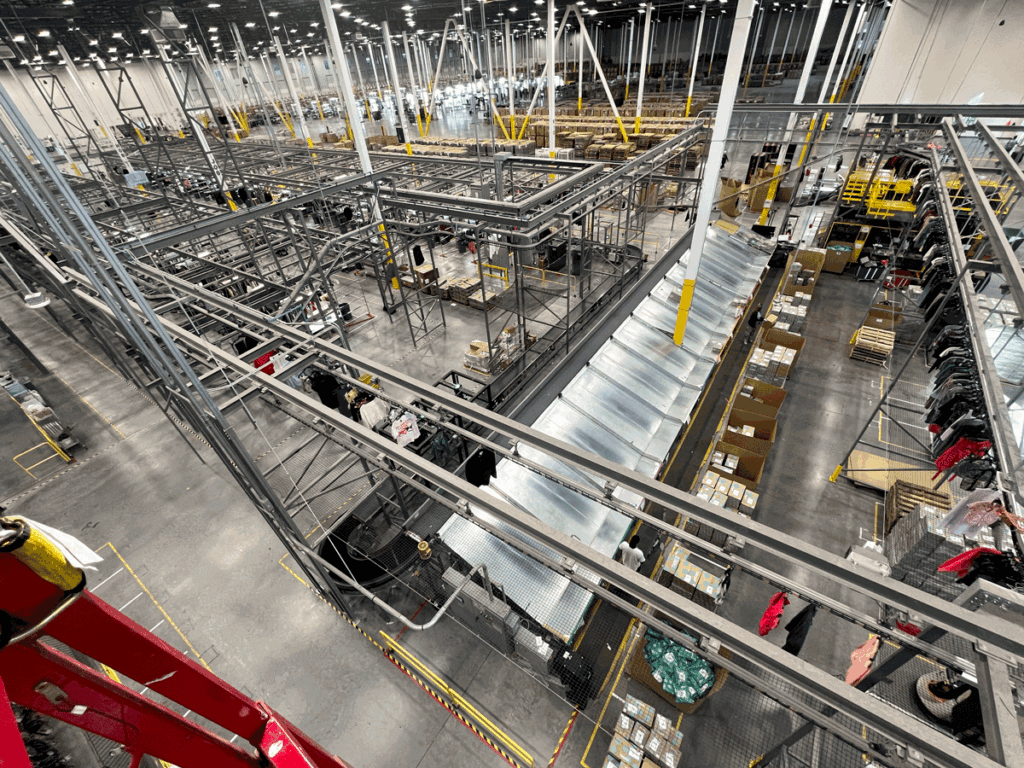
Apparel e-commerce order fulfillment and shipping center.
New Hire Safety Statistics
According to a 2024 OSHA report, 36% of all workplace injuries and illnesses involved employees who had been on the job for a year or less. Travelers Insurance echoed those results in a study analyzing millions of workers’ comp claims.
Data from the Construction industry alone shows 47% first-year injuries, with a whopping 51% WC rate.
Workplace Safety Risks Every New Hire Faces
The previous stats are striking. Yet, several common workplace conditions can potentially harm our new team members. Let’s take a closer look at each circumstance and discuss ways to reduce or eliminate these risks.
- Limited Experience and Insufficient Training: In today’s tight job market, an increasing number of young people are not receiving early on-the-job experience. Other factors, such as social media, also contribute to a new generation with reduced personal interactions with peers and adults.
- The Fallacy of Self-Sufficiency: Social media has also created a class of “superstars” who seem to know everything. These false impressions create a double-edged effect: That one should be highly skilled, and that high achievement is easy. In reality, we need teams to succeed, and curious questioning is not a weakness, but a strength. Sadly, many young people feel ashamed or embarrassed when they don’t know something and will not ask for help.
- Language Barriers: The primary language used in the workplace must be presented and received equally for all workers, regardless of native language. OSHA and several other governmental laws require this policy. With new Translation tools in our pockets, this is becoming less of a barrier, yet it still exists.
- Unfamiliarity with Policies and Procedures: Every recruit arriving at a new company receives a ton of information about the company’s policies, rules, and procedures, which may be drastically different from those of their previous assignment. Or, they may never have had experience with this kind of information.
- Lack of Oversight and On-the-Job Training (OJT): Whenever a new hire enters the workplace, it’s the hiring manager’s or their direct supervisor’s responsibility to provide the new worker with sufficient oversight and OJT for all tasks they are required to perform. For example, in highly competitive times, the manager’s availability may be compromised, leaving the recruit at risk.
- Over-Reliance on Technology, AI, Sensors, etc.: We all leverage technology to improve our daily lives, but it can also hinder the development of basic personal safety skills. While some technologies can be beneficial, too much can stunt our understanding of the inherent risks in common daily tasks.
- Diminishing Institutional Knowledge, The Aging Workforce: Older team members are an often-overlooked asset. If a company fails to adequately deploy veteran team members to guide new hires, productivity will decline, and workplace injuries will increase.
- Economic Demand Increases the Output Expectations: Every industry feels the rising economic pressure to grow. Every year, thousands of fresh adults enter the workforce for the first time. It’s the company’s responsibility to properly prepare new hires for their entry-level roles. Under pressure, however, inexperienced workers may be assigned to tasks they are not fully prepared for.
- High Turnover Rates and Seasonal Workers: New hires seek part-time or seasonal work for a variety of circumstances that may prevent them from committing to full-time work, such as full-time students or parents of school-age children. These workers are often less committed to the company and its policies, posing a potential risk to the company.
You may also enjoy this article.

Onboarding, Training, and Safety Practices That Protect New Hires
Improve and Extend New-Hire Onboarding Programs
Offer new employees a “hands-on” approach, establish peer mentoring, and provide plenty of time to absorb training and build confidence in real-world conditions. Create a high-visibility safety culture: When new hires see that safety is taken seriously by leadership and peers every day, they are more likely to follow. Supervisors can thwart complacency by continuously promoting awareness training, toolbox talks, daily audits, and site walks.
Simplify and Translate Key Safety Information
Remove language barriers with multi-language training materials, interpreters, symbols, verbal tests, simplified signage, and instructions.
Schedule Safety
Limit overtime hours, rotate tasks to prevent fatigue, and avoid assigning new hires to hazardous situations, reserving high-risk tasks for trained, experienced individuals. Limit the hiring of part-time and seasonal workers.
Audit Lead Indicators
Analyze trends and data points, address early warnings, and understand the gaps in training, risk assessments, and cultural shifts.
Supporting New Employees Beyond Day One
New hires often start on a great footing, but workplace safety can easily be overlooked. It is our job as employers and leaders to support every new hire equally, regardless of role or time on the job. We must meet the unique needs of each employee’s circumstances and support them with the resources they need to get up to speed within our organization.
By taking these suggestions into consideration, we can train for skill levels while keeping new employees safe and supporting training goals, benefiting their career advancement and our bottom line.
About SilMan Industries
SilMan Industries (previously SilMan Construction) is based in San Leandro, Calif., with Engineering and Field Operations offices in Tupelo, Miss. The firm provides integrated turnkey solutions in the Industrial, Manufacturing, Distribution, and Public Works sectors.
Notably, in 2010 SilMan Industries was contracted to dismantle and remove the NUMMI assembly line in Fremont, Calif., transport the equipment, and reinstall the system in Blue Spring, Miss., establishing Toyota Motor Manufacturing Mississippi (TMMMS). This high-visibility project ignited the company’s meteoric growth, laying the foundation for SilMan’s national service area.
For more information, please visit www.silmanindustries.com/about.


Optimize Your Investment
SilMan’s multi-disciplinary Specialty Trade Services (STS) is a community of project professionals: Engineers, Project Managers & Coordinators, Trade Teams, and Safety Management. Bringing a new performance standard throughout the industrial community:
STS commonly supports the SilMan System Integration group. Specializations include distribution center optimization for the Fulfillment and Parcel sectors (see “A Comprehensive Guide to Efficient Parcel Handling Systems”), food and beverage manufacturing and warehouse solutions, and end-to-end innovative manufacturing solutions.
Check out SilMan’s “One Team” approach in action: Facility improvements and a new bottling line at a leading West Coast dairy.
Frequently Asked Questions
Frequently Asked Questions
Q: What are the most common safety risks for new warehouse employees?
A: The most common safety risks for new warehouse employees include improper material handling, lack of familiarity with heavy machinery or automated conveyor systems, slips, trips, and falls, and a failure to recognize facility-specific blind spots. Because new hires are still adjusting to a new physical matrix, they are statistically more vulnerable to these operational hazards during their first 90 days.
Q: How long does it take for a new worker to adapt to workplace safety protocols?
A: Studies show that it takes approximately 90 days for a new worker to fully internalize a facility's safety culture and operational workflows. Statistics indicate that a significant percentage of workplace injuries occur in an employee's first year, with the highest risk in the first few months before safety habits become second nature.
Q: How can industrial facilities reduce safety risks for new hires?
A: Industrial facilities can reduce new hire safety risks by implementing a structured, multi-phase onboarding process that emphasizes hands-on mentorship and continuous reflection. Key strategies include:
-
Providing job-specific, interactive safety training rather than just reading materials.
-
Establishing a "buddy system" or mentorship program with experienced trade professionals.
-
Conducting regular site walks to highlight specialized machinery hazards and emergency stops.
-
Designing workspace layouts with human ergonomics and safe traffic flows in mind.